
What’s Included in Our Coconut Water Private Label Service
Private label coconut water manufacturing can seem relatively simple at first glance. A buyer chooses a flavor, selects a packaging format, adds their branding, and prepares the product for export.
But in reality, successful beverage manufacturing involves far more than producing and shipping the drink itself.
Most sourcing challenges in the beverage industry do not appear during the quotation stage. They usually emerge later — when packaging schedules change unexpectedly, labels need adjustment for import regulations, raw material supply fluctuates, or products spend weeks moving through different shipping and storage conditions before finally reaching retail shelves.
That is why experienced importers rarely focus only on finding a factory with filling capacity.
Instead, they look for a manufacturing partner that understands the operational side of beverage exports just as well as the production side.
At Interfresh, private label coconut water projects are developed with long-term commercial growth in mind. The objective is not simply to complete a single shipment, but to help buyers build a supply chain that remains consistent as volumes grow, new markets open, and distribution expands over time.
Because in beverage manufacturing, long-term success is rarely defined by the first order alone.
It is built through stable production, reliable coordination, and the ability to deliver consistently across every shipment that follows.
Formula Development That Matches Real Market Conditions
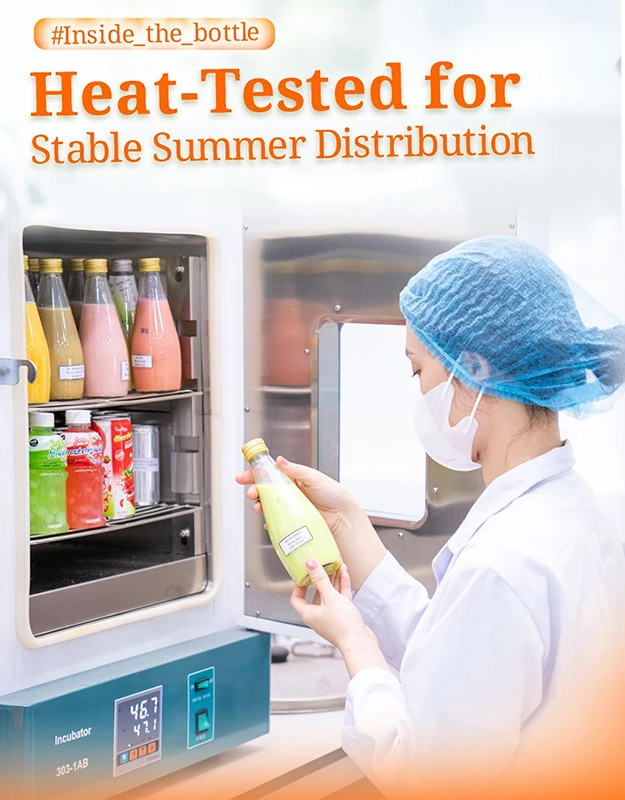
Packaging Is More Than Branding
Many new beverage brands tend to approach packaging mainly from a branding perspective. The attention usually goes toward visual elements — how the product looks on the shelf, whether the can feels premium enough, or if the bottle design stands out in a competitive retail environment.
But experienced importers often evaluate packaging from a much broader commercial perspective.
Because in beverage manufacturing, packaging is not only about appearance. It also affects how efficiently the product can be produced, shipped, stored, and scaled over time.
The packaging format chosen for a beverage can influence everything from freight cost and container loading efficiency to MOQ structure, production scheduling, and shelf-life performance during export.
A slim aluminum can, for example, may help position the product as more modern or premium, especially in wellness and convenience retail channels. At the same time, slim cans can involve different sourcing lead times and production planning requirements compared with standard can formats, particularly when custom printing or specialized materials are involved.
PET bottles remain popular in many markets for a different reason. They are familiar to consumers, cost-effective for mass distribution, and often work well in price-sensitive retail channels. However, bottle dimensions and shape can also affect pallet configuration and container efficiency, which becomes increasingly important once shipment volumes begin to scale.
These are the kinds of operational details that many new brands only discover later in the sourcing process.
The strongest beverage projects are usually the ones that balance both sides successfully — packaging that not only looks right for the market, but also performs efficiently across production, logistics, and long-term distribution.
Export Documentation & Shipment Coordination
Many beverage importers underestimate how much coordination happens after production is completed.
In beverage exports, documentation accuracy matters almost as much as manufacturing quality itself.
A shipment delay caused by incorrect paperwork can disrupt:
- distributor inventory planning
- supermarket delivery schedules
- seasonal retail campaigns
- product launches
This becomes particularly critical in markets with stricter food import regulations.
Interfresh supports export-oriented beverage projects with documentation processes designed around international shipment requirements, including:
- commercial export paperwork
- health certificates
- certificate of origin support
- COA documentation
- container coordination
For experienced buyers, this operational reliability often becomes more valuable over time than simply securing the lowest FOB quotation.
Minimum Order Quantity (MOQ)
MOQ is one of the first questions most beverage buyers ask.
Ironically, it is also one of the most misunderstood parts of beverage manufacturing.
Many first-time importers assume MOQ is determined mainly by the beverage itself. In reality, packaging structure often has a much larger impact on minimum production requirements than the liquid inside the package.
That surprises many buyers entering private label manufacturing for the first time.
A standard coconut water formula using existing packaging materials may support relatively flexible production volumes. However, once custom printed cans, unique bottle molds, or multiple flavor variations are introduced, production complexity increases quickly.
This happens because beverage manufacturing involves more than liquid filling.
Factories must coordinate:
- packaging procurement
- production scheduling
- line setup
- carton preparation
- printing requirements
- pallet configuration
Each customization layer affects efficiency.
Experienced manufacturers explain these operational realities early because MOQ misunderstandings often create sourcing problems later.
MOQ by Packaging Format
Packaging format remains one of the biggest drivers behind production structure.
For example, Tetra Pak production typically follows different operational economics than PET bottle filling or aluminum can manufacturing.
Standard packaging formats usually allow more flexibility because factories already maintain compatible production materials and line configurations.
Custom packaging, however, changes the equation.
A fully customized slim can with printed body artwork may require:
- additional sourcing lead time
- larger print runs
- more packaging coordination
- higher minimum material commitments
This is why experienced importers often begin with commercially efficient packaging formats during early market-entry stages before expanding into more customized packaging later.
That strategy reduces inventory risk while allowing brands to validate retail demand first.
First-Order Discount Options
Launching a new beverage SKU always carries uncertainty.
Even experienced distributors rarely know exactly how a product will perform until it enters real retail environments.
Because of this, many buyers prioritize flexibility during their first production cycle rather than maximizing customization immediately.
In some cases, first-order strategies may involve:
- using stock packaging formats
- simplifying label structures
- reducing SKU variations
- combining shipments strategically
This approach helps buyers reduce upfront risk while still entering the market with professionally manufactured products.
For startup beverage brands especially, preserving cash flow during early expansion stages is often more important than achieving perfect packaging customization immediately.
Experienced manufacturers understand this dynamic and usually structure early discussions around long-term scalability rather than short-term production alone.
Pricing Structure
One of the fastest ways to identify inexperienced beverage buyers is how heavily they focus on unit pricing alone.
Experienced importers know beverage pricing is never isolated from operational structure.
Two products with nearly identical formulas may have very different landed costs depending on:
- packaging selection
- freight efficiency
- filling technology
- market compliance
- sourcing seasonality
This is why professional beverage manufacturers rarely provide accurate quotations without first understanding the broader commercial context behind the project.
Factors That Affect Price: Volume, Packaging, Formula
Raw material pricing is naturally one of the biggest cost variables in coconut water manufacturing.
Unlike highly standardized industrial ingredients, coconut supply can fluctuate depending on:
- harvest cycles
- weather conditions
- regional agricultural output
- export demand
However, ingredient cost is only one part of the pricing structure.
Packaging frequently becomes an equally important factor.
For example, custom printed aluminum cans may significantly increase total project cost compared with standard can bodies using sticker labels. Likewise, bottle shape changes can affect freight efficiency enough to alter long-term profitability across container shipments.
Formula complexity also influences manufacturing economics more than many buyers initially expect.
A straightforward coconut water product is operationally simpler than a beverage containing:
- vitamins
- collagen
- fruit blends
- pulp
- functional ingredients
Each additional component may affect:
- sourcing
- filling behavior
- shelf-life validation
- compliance requirements
This is why experienced manufacturers typically approach pricing from a systems perspective rather than quoting isolated liquid cost alone.
Sample Pricing Ranges (FOB Vietnam)
Most serious importers eventually realize that beverage pricing discussions become meaningful only after several commercial variables are clarified.
These usually include:
- packaging format
- target market
- order volume
- label complexity
- formulation direction
- freight structure
Because of this, professional beverage exporters avoid unrealistic “lowest-price” quotations designed only to attract inquiries.
Instead, they focus on building pricing structures that remain commercially sustainable over repeat production cycles.
That distinction matters.
Many beverage sourcing relationships fail because initial quotations were artificially low and became unsustainable once production realities emerged.
Experienced buyers usually prefer stable long-term pricing over temporary low quotations that later create operational problems.
Packaging Options
Packaging influences almost every part of beverage commercialization.
Consumers may view packaging primarily as branding.
Manufacturers and distributors see something much larger:
- logistics performance
- retail compatibility
- freight efficiency
- shelf-life protection
- inventory economics
This is why packaging discussions inside professional beverage sourcing projects are rarely only about appearance.
Tetra Pak 200ml / 330ml / 500ml / 1L
Tetra Pak continues to perform strongly in coconut water exports because it balances retail practicality with shipping efficiency.
For many importers, especially supermarket-focused buyers, Tetra Pak provides an effective combination of:
- portability
- shelf stability
- storage efficiency
- export durability
Larger formats such as 1L cartons often perform well in family-oriented retail environments where consumers prioritize value purchasing.
Smaller formats, meanwhile, typically fit convenience retail and impulse beverage channels more effectively.
Experienced distributors usually select format sizes based not only on consumer behavior, but also on shelf competition and local pricing psychology.
PET Bottle 330ml / 500ml
PET bottles remain highly relevant in global beverage distribution despite the growth of cans and carton packaging.
One reason is visibility.
Consumers can see the liquid directly, which often creates stronger visual trust in coconut beverages.
PET packaging also performs well in markets prioritizing:
- affordability
- portability
- mass distribution
- price accessibility
However, experienced importers also evaluate PET from a freight perspective.
Bottle structure directly affects:
- pallet efficiency
- container loading
- shipping cost per unit
Small structural packaging decisions can create surprisingly large freight differences across repeated export shipments.
Aluminum Can 250ml / 330ml
Coconut water in cans has grown rapidly, especially among modern wellness and functional beverage brands.
Cans align strongly with:
- convenience channels
- fitness retail
- premium positioning
- urban consumer behavior
But aluminum can sourcing is also more operationally sensitive than many buyers initially expect.
Differences between:
- slim cans
- standard cans
- printed cans
- sleeved cans
can affect:
- MOQ
- lead time
- print scheduling
- production planning
This is why experienced manufacturers often discuss packaging strategy before finalizing commercial quotations.
Label Design Service
Many first-time beverage importers assume label preparation is mostly a graphic design task.
In reality, beverage labeling sits at the intersection of:
- branding
- compliance
- retail functionality
- printing compatibility
A label that looks visually attractive may still fail during actual export execution if important compliance details are missing.
This becomes especially important for supermarket distribution, where labeling requirements are often stricter than wholesale channels.
Professional beverage label preparation involves much more than logo placement.
It may include:
- nutrition formatting
- ingredient sequencing
- barcode positioning
- multilingual adaptation
- compliance alignment
- print margin coordination
Small mistakes in these areas can delay production timelines or create customs clearance issues later.
Experienced manufacturers help buyers reduce these risks before printing begins rather than correcting problems after production is already scheduled.
Lead Time: From Sample Approval to Shipment
One of the biggest misconceptions in beverage manufacturing is assuming production lead time starts when the liquid enters the filling line.
In reality, much of the timeline is driven by packaging coordination.
This is particularly true for private label projects involving:
- custom cans
- printed cartons
- unique bottle structures
- multilingual labels
A beverage may require only a short production window, while packaging procurement and print preparation require significantly longer coordination.
Typical project flow includes:
- sample approval
- artwork confirmation
- packaging sourcing
- production scheduling
- filling
- QC inspection
- export loading
Most private label coconut water projects move within approximately 25–45 days after final artwork approval.
However, lead times can shift depending on:
- seasonal production demand
- packaging availability
- shipping schedules
- raw material conditions
Experienced importers usually forecast production well ahead of peak retail seasons because freight congestion and packaging demand often increase simultaneously during high-volume export periods.
Certifications Included
Global beverage sourcing has become increasingly compliance-driven.
Retailers, distributors, and import authorities now expect stronger transparency around food safety systems, traceability, and production controls than they did even a few years ago.
Professional beverage manufacturers in Vietnam increasingly operate with export-oriented certification structures designed for international markets.
Depending on market requirements, projects may involve:
- ISO systems
- HACCP compliance
- FDA registration
- Halal certification
- GMP procedures
However, experienced beverage buyers eventually learn that certifications alone are not enough.
Operational consistency matters equally.
Because the real test of a manufacturer is not whether a certificate exists on paper.
It is whether the factory can repeatedly deliver:
- stable product quality
- reliable packaging execution
- consistent documentation
- dependable shipment coordination
over long-term production cycles.
That operational consistency is what ultimately supports sustainable retail growth.

FAQ
What is the typical MOQ for private label coconut water?
MOQ usually depends more on packaging structure than the beverage itself. Standard packaging formats generally support more flexible production compared with highly customized packaging projects.
Can I customize the coconut water formula?
Yes. Most OEM coconut water projects involve some level of customization depending on target market positioning, sweetness preference, and retail strategy.
Which packaging format is best for coconut water exports?
There is no single “best” format. Tetra Pak, PET bottles, and aluminum cans each perform differently depending on distribution channel, pricing strategy, and retail positioning.
How long does production usually take?
Most projects require approximately 25–45 days after final artwork approval, although packaging complexity and seasonal production demand may affect scheduling.
Do you support export documentation?
Yes. Interfresh supports export-oriented beverage projects with international shipment documentation and production coordination.
Request Your Private Label Quote
Private label beverage sourcing is no longer only about finding a factory capable of filling coconut water.
The real challenge is building a manufacturing relationship that can support:
- repeat production
- export consistency
- retail scalability
- long-term market growth
That requires more than production capacity alone.
It requires operational understanding of how beverage brands actually grow inside international markets.
Interfresh supports global importers, distributors, wholesalers, and beverage startups with export-focused coconut water manufacturing designed around long-term commercial scalability.
Whether you are developing a new beverage concept, expanding a supermarket private label line, or entering a new regional market, the right manufacturing partner can significantly affect how efficiently your business scales over time.
Contact Interfresh today to discuss your private label coconut water project and receive a customized quotation tailored to your market and packaging strategy.
Leave us a message
Your taste, our best
Contact
Address: 194/8 Street 8, Linh Xuan ward, Thu Duc city,
Ho Chi Minh city, Vietnam.
Address: 81 Dong An, Tan Dong Hiep ward, Di An city, Binh Duong province, Viet Nam
Office: (+84) 28 730 11528
Hotline: (+84) 933 515 819
Email: info@interfresh.com.vn
