
Last updated: November 2026. All prices are indicative budgeting ranges, not binding offers.
Private label energy drinks from Vietnam cost from $4.50 per 24-can tray for 250–330ml cans, FOB Ho Chi Minh City Port. At Interfresh factory, the minimum order (MOQ) for private label fomulation is 400 trays per flavor and production takes 15–25 days.
Final pricing depends on formula, sweetener system, can size, order volume and destination-market rules. Interfresh supplies international distributors, wholesalers, retailers and brand owners with canned energy drinks, from proven base formulas to custom recipes.
How Much Does a Private Label Energy Drink Cost in Vietnam?
In Vietnam manufacturers, costs range from $0.18 to $0.45 per can depending on formula and can size. Standard formulas in 250–330ml cans are the lowest-cost route, zero-sugar or functional formulas cost more, and 500ml cans cost the most per unit.
| Sourcing & Product Configuration | Common Packaging Format | 2026 Vietnam FOB Benchmark (Per Can) | 2026 Vietnam FOB Benchmark (24-Can Carton) | Operational & Cost Context |
|---|---|---|---|---|
| Standard / existing formula (proven original, tropical fruit or less-sugar base) | 250ml Slim / 320ml–330ml Sleek | $0.18 – $0.26 | $4.50 – $6.30 | Minimal R&D delay; fastest route for distributors and first-time launches |
| Zero-sugar or functional formula (sucralose/stevia blend, plant caffeine, ginseng or added vitamins) | 250ml Slim / 320ml–330ml Sleek | $0.23 – $0.34 | $5.60 – $8.20 | Accounts for sweetener balancing, higher active dosages and sample rounds |
| Large-format can line (high-volume value or fitness positioning) | 500ml Standard Can | $0.32 – $0.45 | $7.70 – $10.80 | Higher liquid volume, active load and aluminum packaging footprint per unit |
Indicative reference ranges for preliminary B2B budgeting only. Final pricing varies by exact formulation, sweetness and ingredient profile, can size, packaging and labeling requirements, order volume and shipping terms. Prices exclude ocean freight, insurance, import duty, testing and special-request labels.
What Determines Private Label Energy Drink Manufacturing Cost?
Packaging is the largest cost item. Cans, lids, printing or sleeves and cartons make up 40–50% of unit cost; ingredients, actives and sweeteners make up 25–35%; processing, carbonation or thermal treatment and quality control make up 15–25%.
The example below applies these shares to the 330ml standard tray price of $6.30. It is an illustration of the ranges, not the cost breakdown of a specific order.
| Cost component | Share of unit cost | Illustration on a $6.30 tray | What moves the cost |
|---|---|---|---|
| Packaging (can, lid, print or sleeve, tray) | 40–50% | $2.52–$3.15 | Can size, print method, aluminum price |
| Ingredients (caffeine, taurine, vitamins, sweetener, flavor) | 25–35% | $1.58–$2.21 | Natural vs. synthetic caffeine, sugar vs. zero-sugar, extract dosage |
| Processing & QC (blending, carbonation, seaming, COA) | 15–25% | $0.95–$1.58 | Run length, changeovers, shelf-life testing |
Formula, sweeteners and active ingredients
Formula choice sets raw material cost, sampling rounds and taste balance. Starting from an established base formula shortens validation; a custom recipe adjusts flavor, sweetness or functional positioning for a specific channel.
- Caffeine source: synthetic caffeine anhydrous is cost-efficient and consistent; natural caffeine from green tea extract or guarana supports clean-label positioning and raises cost.
- Functional actives: taurine, B-vitamins (B3, B5, B6, B12), L-theanine, ginseng and herbal extracts add value and cost by dosage.
- Sweetener system: sugar gives body and masks caffeine bitterness. Zero- or reduced-sugar formulas (sucralose, stevia) need taste balancing but can lower tax exposure in sugar-tax markets.
- Carbonation and flavor: carbonation level, acidity and flavor concentrate are calibrated together so the drink stays crisp without harsh bitterness.
Can format, decoration and secondary packaging
Can size, print method and pack format affect both unit cost and how many trays fit in a container. Interfresh supports aluminum cans in 180ml, 250ml, 330ml and 500ml, with 6-can shrink packs and 24-can trays.
- Can size: 180–250ml cans suit single-serve and trial lines; 320–500ml Slim, Sleek and Standard cans add liquid volume and material per unit.
- Decoration: direct-printed cans suit higher-volume runs; shrink sleeves give design flexibility across SKUs with different setup terms. Printing mold costs $600 per SKU (refundable, see terms below) and a stock label costs $200 per SKU.
- Secondary packaging: 6-can shrink packs, 24-can trays and palletization set shipping density. Plan unused packaging to avoid dead stock.
Processing, sterilization and quality control
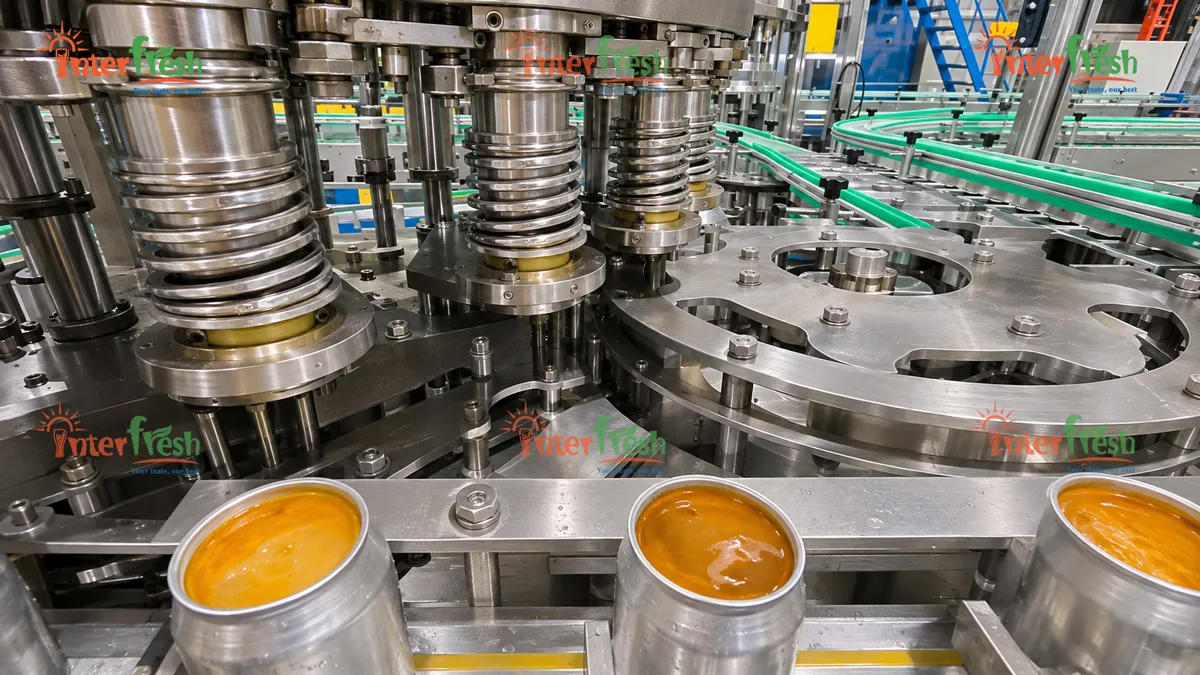
Processing and QC protect batch stability from blending tank to export container. Carbonated drinks need cold-fill chilling and CO2 control; non-carbonated drinks use pasteurization or sterilization matched to pH and actives, which adds energy and line time.
Each batch is checked for Brix, pH, sensory profile, can seam integrity and microbiological limits, with a batch COA issued to support caffeine, vitamin and sweetener consistency over the shelf life.
What Is the Minimum Order for a Private Label Energy Drink from Interfresh?
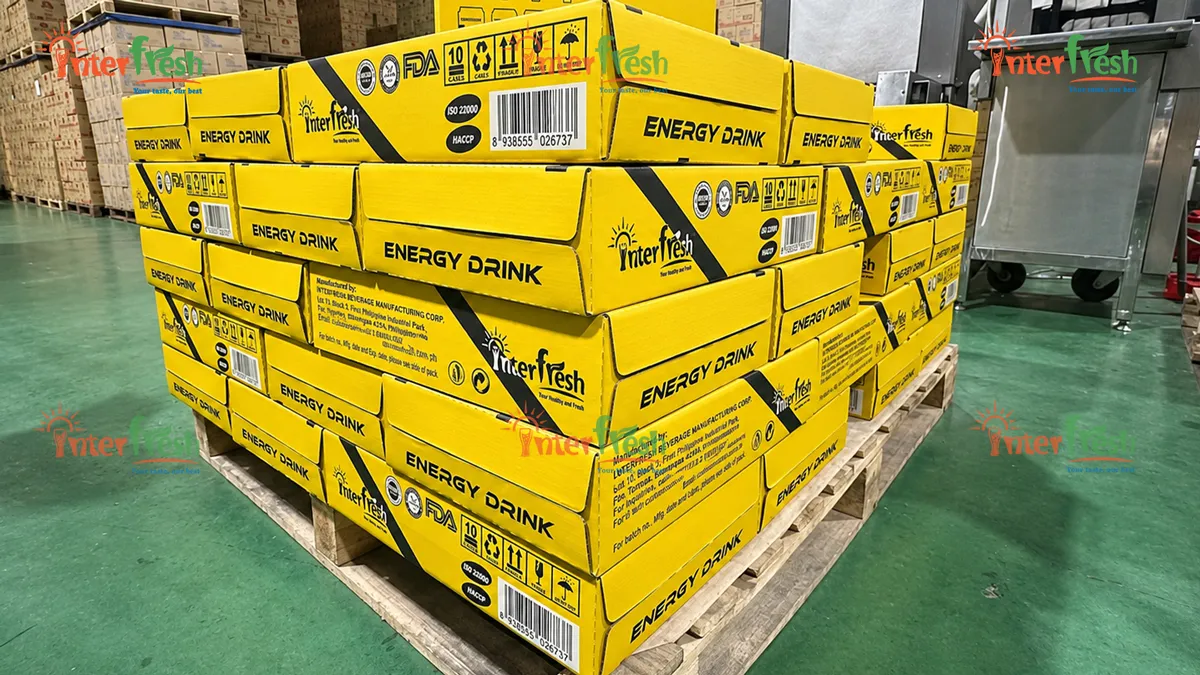
The minimum order is 400 trays per flavor. At the benchmark ranges above, Price and cost depending on formula and can size, before printing and freight.
| Can size | Trays per 20ft container | Cans per 20ft container | Max flavors at MOQ in 1 × 20ft |
| 250ml | 2,854 | 68,496 | 7 |
| 330ml | 2,377 | 57,048 | 5 |
| 500ml | 1,520 | 36,480 | 3 |
| Order term | Interfresh specification |
| MOQ | 400 trays (24 cans each) per flavor |
| Standard flavors | Original, Strawberry, Blueberry, Grape |
| Production time | 35 days |
| Payment | T/T 50% deposit, 50% balance before shipment (or negotiated by order) |
| Shelf life | 24 months |
| Price basis | FOB Ho Chi Minh City Port, quoted per 1 × 20ft container |
Which Certifications and Label Rules Apply to Energy Drink Exports by Market?
Manufacturing standards are the same across markets, but label and formula rules are not. Confirm caffeine limits, permitted sweeteners and colors, and warning text with your importer before artwork is final.
| Standard | What it covers |
|---|---|
| ISO 22000:2018 | Food safety management system |
| HACCP | Hazard analysis and critical control points |
| GMP | Good manufacturing practice |
| HALAL | Halal certification for Middle East, Southeast Asia and other halal-focused markets |
| FDA | Operations aligned with US FDA requirements for food facilities and labeling |
| Market | What to check before artwork |
|---|---|
| USA | FDA facility registration; whether the product is labeled as a conventional beverage (Nutrition Facts) or a supplement (Supplement Facts) |
| EU | Drinks above 150 mg/L caffeine must carry a high-caffeine warning; permitted sweeteners and colors |
| Middle East | Halal certificate; national caffeine and label-language rules |
| Australia and others | Caffeine limits, permitted additives, language and nutrition panel format |
Request copies of current certificates and a sample batch COA before placing an order, so your importer can review them against local rules.
Canned Energy Drink Shelf Life and Quality Control
Interfresh canned energy drinks are quoted with a 24-month shelf life. Shelf life is supported by measurable checks at each stage:
- Raw materials and batching: Brix, pH and sensory profile.
- Filling and seaming: can seam and seal integrity, carbonation or thermal treatment control.
- Finished goods: microbiological safety and batch COA, so the product withstands ocean transit and multi-tier distribution.
How Can You Optimize a Private Label Energy Drink Budget?
Start with a proven base formula, limit the first order to flavors with clear demand, and lock destination rules before printing. These steps protect unit cost without reducing food safety or stability.
- Use a proven base formula to validate demand. It shortens sampling and lowers formulation risk before you invest in customization.
- Keep the first order focused. With a 400-tray minimum per flavor, one 20ft container can mix up to 7 flavors in 250ml or 5 in 330ml. Start with 2–3 core flavors and expand after sell-through.
- Match can size to price point and container. 250ml fits 2,854 trays per 20ft container versus 1,520 for 500ml, which changes freight cost per can.
- Match decoration to volume. The $600 mold fee is refundable at 250,000 pcs per SKU within 2 years, so confirm your forecast first.
- Lock ingredient and label rules before artwork. Confirm permitted sweeteners, colors, active limits and mandatory warnings for your destination.
Two Common Ordering Patterns
Repeated scope changes during sampling. A buyer changes sweetness, flavor and can details across several rounds without confirming destination label rules. Extra lab rounds extend lead time before the 35-day production window even starts.
Clear brief and early spec lock. A buyer defines the target market, picks core flavors that fit one 20ft container, evaluates samples systematically, and confirms packaging and FOB terms early. The order moves cleanly from deposit to production and export dispatch.
How to Request an Accurate Quote
A clear brief lets Interfresh confirm feasibility, container capacity and price quickly. Include:
- Destination market(s): country or region of sale and any compliance or Halal requirements.
- Formula and sweetener direction: existing formula, taste adjustment or custom development; sugar or zero-sugar.
- Can size and pack format: 250ml, 330ml or 500ml, and 24-can tray configuration.
- Order volume and timeline: flavors, trays per flavor, and target delivery window.
Once the brief is received, Interfresh can share product options, coordinate sample evaluation and confirm commercial terms.
Why Do B2B Buyers Choose Interfresh?
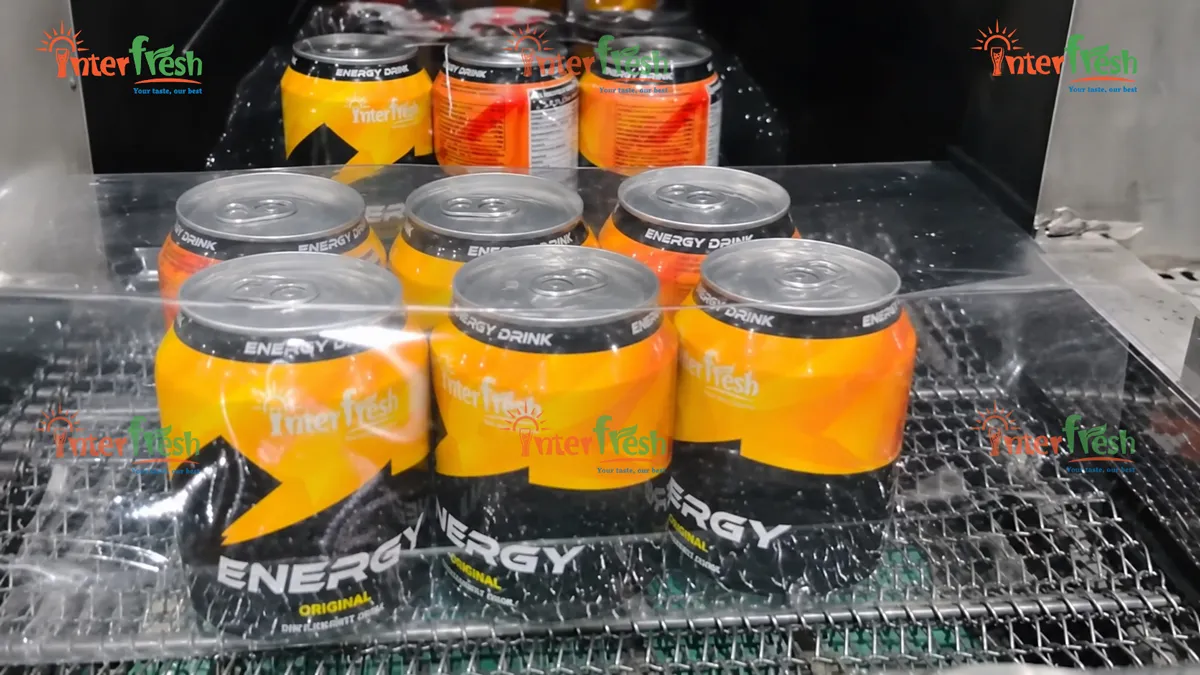
Interfresh focuses on export execution, consistent batch quality and flexible B2B support.
- Export-ready quality systems: operations aligned with FDA, HALAL, ISO 22000:2018, GMP and HACCP, with batch COA to support customs clearance and retail audits.
- Formula and sweetener versatility: standard, reduced-sugar and zero-sugar profiles using sweeteners such as sucralose, acesulfame-K, aspartame or stevia where suitable.
- Multi-category range: aluminum cans from 180ml to 500ml, plus fruit juices, coconut drinks, aloe vera, seed milk, nata drinks, tea and coffee, so you can consolidate sourcing under one exporter.
- R&D-to-export coordination: guidance from sample evaluation and stability checks through container loading at Ho Chi Minh City Port.
Frequently Asked Questions
What is the MOQ for private label energy drinks in Vietnam? The minimum order is 400 trays of 24 cans (9,600 cans) per flavor, priced FOB Ho Chi Minh City Port. Flavors can be combined in one 20ft container
How long does production take? Production takes 15-25 days. Payment is a 50% T/T deposit and 50% before shipment. Ocean transit time is additional and depends on the destination.
Is a zero-sugar energy drink more expensive to produce? Yes. In this guide’s ranges a zero-sugar or functional 24-can tray costs more for a standard formula, because sweetener balancing, plant caffeine and higher active doses add cost and sample rounds.
What does FOB Ho Chi Minh City Port include? FOB covers factory supply and loading at the port of export. Ocean freight, insurance and destination import duties are handled by the buyer under the agreed commercial terms.
What is the shelf life of canned energy drinks? Interfresh canned energy drinks are quoted with a 24-month shelf life, supported by Brix, pH, microbiological and seam checks and a batch COA.