
Sparkling coconut water is coconut water carbonated with CO₂ and packed in cans or bottles, positioned as a lower-sugar alternative to soda. For US importers, the key questions are whether demand is real and whether a Vietnamese OEM manufacturer can make it consistently. This guide covers both: why sparkling coconut water is gaining ground in the US, and how Interfresh produces it with up to 95% natural ingredients.
Key takeaways
- It targets buyers who want a soda-like drink with a shorter ingredient list, not only people who already buy still coconut water.
- US interest is driven by sugar reduction, “better-for-you” positioning, functional hydration and non-alcoholic drinks for adults.
- It is harder to make than still coconut water: the base is low in acid, carbonation causes foaming, and heat treatment is applied to a pressurized can.
- The Mekong Delta is a major coconut-growing region, which shortens the distance from harvest to processing.
- In an OEM project, the main levers are coconut water content, carbonation, sweetness, flavor, can size and printing. Each affects taste, labeling and cost.
Why Sparkling Coconut Water Is Gaining Attention in the US
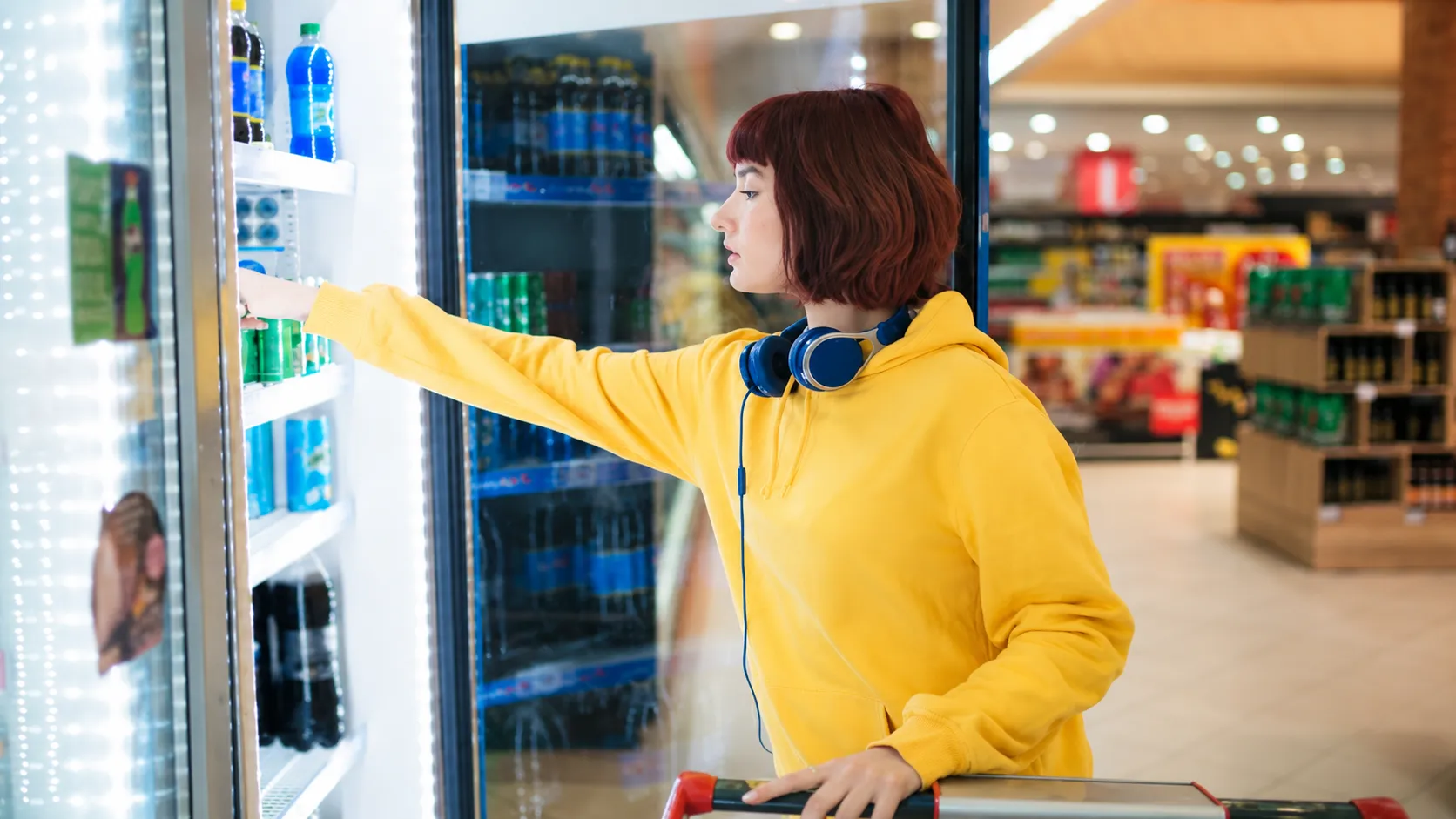
No single factor explains the interest. Four shifts reinforce one another.
Sugar and soda reduction
North American consumers are gradually replacing soda with lower-sugar options that offer electrolytes. Coconut water is a naturally sweet base, and carbonation keeps the lively drinking experience of traditional soda.
“Better-for-you” positioning
Coconut water already carries a hydration and electrolyte image with US consumers. A carbonated version lets brands extend that image to an occasion closer to soft drinks.
Non-alcoholic drinks for adults and flavor exploration
Flavored, lightly carbonated products widen the occasions for use: with meals, after workouts, or as a non-alcoholic alternative at the bar.
Original, unsweetened products still hold most of the current market share (Market.us: 64.2% unsweetened, 54.3% original), but the flavored segment is growing faster in Western markets (Growth Market Reports). Leading flavors include pineapple, mango, passion fruit, berries, ginger-lemon and cucumber-mint.
Major brands are already moving
Vita Coco, Coaqua and Good Nut are actively developing the category in North America:
- Vita Coco Sparkling (US, 2018): launched exclusively at Kroger in a 12 oz aluminum can, half coconut water and half sparkling water, positioned as “bubbles with benefits.” Later brought to the UK.
- Coaqua (2025): rebranded at Expo West 2025 and added a lightly carbonated Sparkling line plus new flavors. Distributed in about 3,000 stores and on Amazon since May.
- Good Nut (Gopuff and Tom Brady, June 2026): sparkling version in an 11.8 oz can with no added sugar, sold exclusively on Gopuff, which reports coconut water sales up 115% year over year.
What Each Buyer Group Wants
Different buyer groups want different things, and that changes your product specification.
| Buyer group | What they care about | Specification decision |
| Soda switchers | Sugar intake; carbonation and a soda-like experience with less sugar | Naturally sweet coconut base, no added sugar |
| Active and fitness consumers | Clean-label expectations; light, refreshing “natural” hydration | Short ingredient list; higher carbonation level |
| Convenience and impulse channels | Convenience on the go | 250 ml or 330 ml cans |
| Natural and premium grocery | Origin story, premium design | Custom printed can or sleeve |
| Foodservice and hospitality | Flavor discovery; mixer, mocktail base or minibar drink | Fruit juice or natural flavor variants |
What the US Shelf Looks Like Today
Sparkling coconut water competes for shopper attention with four types of product:
| Product type | What it is | Where you can differentiate |
| Still coconut water | Established category in cartons, bottles and cans | Offer a carbonated format for shoppers who find still coconut water too plain |
| Sparkling coconut water (real coconut water base) | Coconut water plus CO₂, sometimes with juice or flavoring | The category this guide covers |
| Coconut-flavored sparkling water | Carbonated water with coconut flavor, usually built on flavoring (check each label) | A real coconut water base is a clear point of difference |
| Functional and energy hybrids | Carbonated coconut drinks with added functional ingredients | Simpler formulation, cleaner story |
Why Vietnam Is a Strong Source for Carbonated Coconut Water
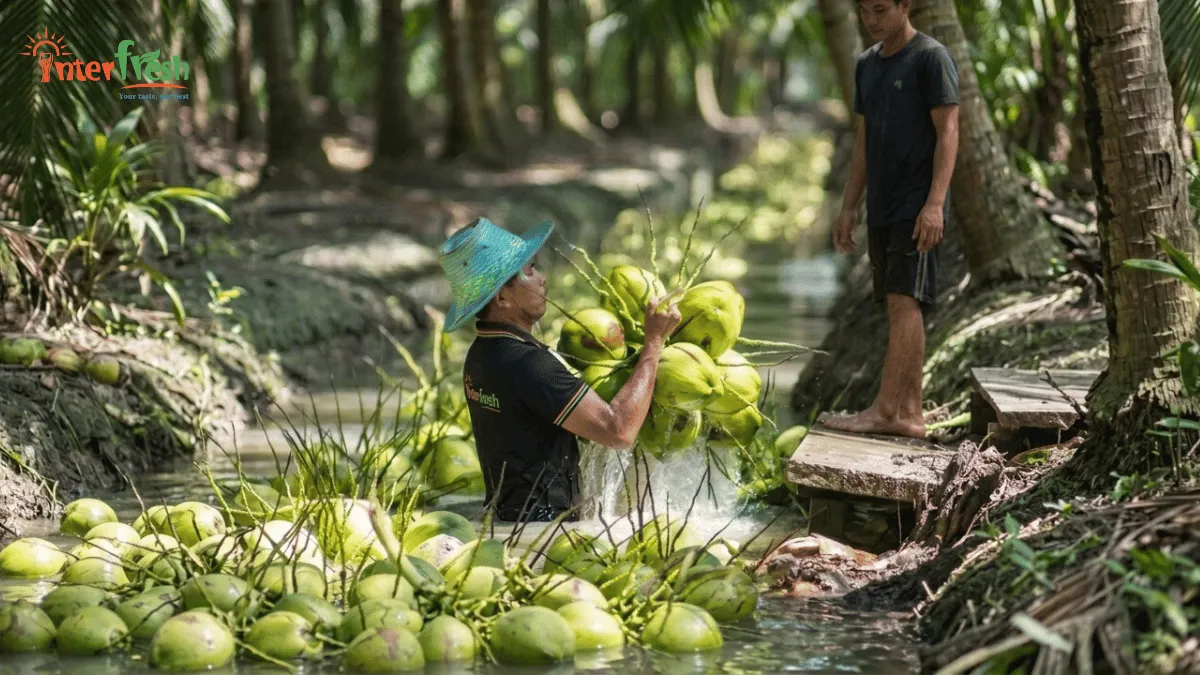
Vietnam ranks fourth in Southeast Asia for growing and supplying fresh coconuts. The Mekong Delta accounts for 200,000 ha (Ben Tre, Tra Vinh, Tien Giang, Vinh Long). Interfresh works long term with established growers, which keeps transport distance, lead time, sweetness and freshness consistent, and makes origin traceability easier for US-bound shipments.
How Is Sparkling Coconut Water Made in Vietnam?
This is a typical production flow. Parameters and equipment differ between factories, so use it as a framework for asking better questions.
| Step | Purpose | What is controlled |
| 1. Select and grade coconuts | Start with a clean, naturally sweet base | Maturity, appearance, defects |
| 2. Dehusk and extract water in a closed system | Collect clean water and limit oxygen exposure | Hygiene, speed, oxygen exposure |
| 3. Vacuum deaeration | Remove dissolved oxygen so PPO enzymes cannot turn the water pink or brown | Dissolved oxygen, vacuum level |
| 4. Centrifugal or membrane (UF) filtration | Remove protein complexes that cause haze and foaming, keep minerals | Filtration efficiency, temperature |
| 5. Base standardization and blending | Keep batches consistent; blend juice or flavor; add the remaining ~5% (e.g. vitamin C) | Brix, pH, acidity, dosing |
| 6. Mild acidification | Lower pH from about 5.2 to 4.5-4.6 for gentler heat treatment that preserves fresh flavor | pH, acid type and dosage (citric or ascorbic) |
| 7. Chilling and CO₂ injection | Dissolve CO₂ into the chilled base to limit foaming | 2-4°C, pressure, target volumes |
| 8. Isobaric counter-pressure filling and sealing | Fill and seal under balanced pressure to eliminate foam | Fill level, pressure balance, seam integrity |
| 9. Heat treatment | Commercial sterility for ambient storage: UHT before carbonation, or tunnel pasteurization after seaming | Time and temperature, validated per package |
| 10. Cooling, coding and packing | Protect the can and enable traceability | Cooling, batch code, packing pattern |
Bottles (PET or glass) follow aseptic filling: UHT first, then CO₂ injection and filling into sterilized bottles. Aluminum cans follow post-fill sterilization: carbonate, cold fill, seam, then tunnel pasteurizer.
Three Challenges in Producing Sparkling Coconut Water
With 80-100% natural coconut content, the biggest challenge is preserving fresh coconut flavor while still achieving commercial sterility for ambient storage.
Controlling pH and UHT sterilization
Natural coconut water has a pH of about 5.2, a low-acid range where heat-resistant spore-forming bacteria can grow.
The problem: sending 95% coconut water straight into conventional UHT (e.g. 140°C for 4 seconds) destroys enzymes and caramelizes sugars. The water darkens and tastes cooked.
The solution: mild acidification. A very small amount of citric or ascorbic acid (vitamin C) lowers pH to 4.5-4.6, and the sterilization regime can drop to roughly 115-121°C, protecting flavor, color and clarity.
Any acidity regulator must be declared on the label. The US regulatory pathway depends on the final formula and process, so confirm it with a process authority before locking the specification.
Heavy foaming during filling
The problem: dissolved proteins and minerals act as surfactants when CO₂ is added. At industrial line speeds, foam overflows the container, causing volume loss and compromising sterility at the mouth.
The solution: (1) centrifugal or UF filtration removes foam-prone proteins without stripping minerals; (2) chill to 2-4°C before CO₂ saturation, then fill with an isobaric counter-pressure filler.
Oxidation and discoloration (pink or brown)
The problem: adding about 5% other ingredients and carbonating without tight control dissolves oxygen, and the polyphenol oxidase (PPO) enzyme turns the water pink or brown.
The solution: a fully closed-loop process. Right after extraction, water passes through a vacuum deaerator before heating or carbonation, and vitamin C is included as a natural antioxidant.
Choosing the Right Packaging Technology
There are two industrial filling-line options:
| Criteria | Option 1: Aseptic cold filling | Option 2: Post-fill sterilization |
| Packaging | Pressure-resistant PET or glass bottle | Aluminum can |
| Process | UHT, cool, inject sterile CO₂, fill into sterilized bottles | Blend, inject CO₂, cold fill, seam, tunnel pasteurizer |
| Flavor quality | Very good; short heat exposure preserves delicate taste | Slightly affected; the filled can spends longer at high temperature |
| Capital investment | Very high; cleanroom and strict aseptic control | Medium to low; easier to run at scale in Vietnam |
Quality Control from Raw Material to Finished Can
| Stage | Typical checks | Why it matters |
| Coconuts and incoming materials | Visual grading, supplier records, specifications | Prevents problems at the source |
| In-process | Brix, pH, temperature, CO₂, fill level | Keeps every batch in specification |
| Seam and can inspection | Seam measurement, visual inspection | Protects against leaks and spoilage |
| Finished product | Sensory, microbiological, label and code check | Confirms safety and correctness |
| Stability and shelf life | Storage trials, retained samples | Shows how carbonation, taste and appearance hold |
| Traceability | Batch codes linked to raw materials and production records | Supports investigations and recalls |
What You Can Customize in an OEM Project
These are the levers you control when launching private label or custom-formula sparkling coconut water.
| Lever | Options | US market consideration | Trade-off |
| Coconut water content | 100%, or blended with water or juice | Label must reflect what is in the can | Higher content raises cost and flavor variability |
| Carbonation | Light to strong | Soda switchers may expect more fizz | Strong fizz masks coconut flavor, raises foaming risk |
| Sweetness | Naturally sweet, or adjusted | “No added sugar” appeals to many buyers | Natural sweetness varies by season |
| Flavor | Original, fruit juice or natural flavoring | Familiar flavors are easier to explain on shelf | Each variant adds development time and SKUs |
| Can size | Typically 250 ml or 330 ml | Single-serve suits convenience and on-the-go | Smaller cans cost more per liter |
| Branding | Printed can or sleeve | Premium design stands out on shelf | Printing has its own MOQ and lead time |
Interfresh: A Reliable Sparkling Coconut Water Supplier in Vietnam
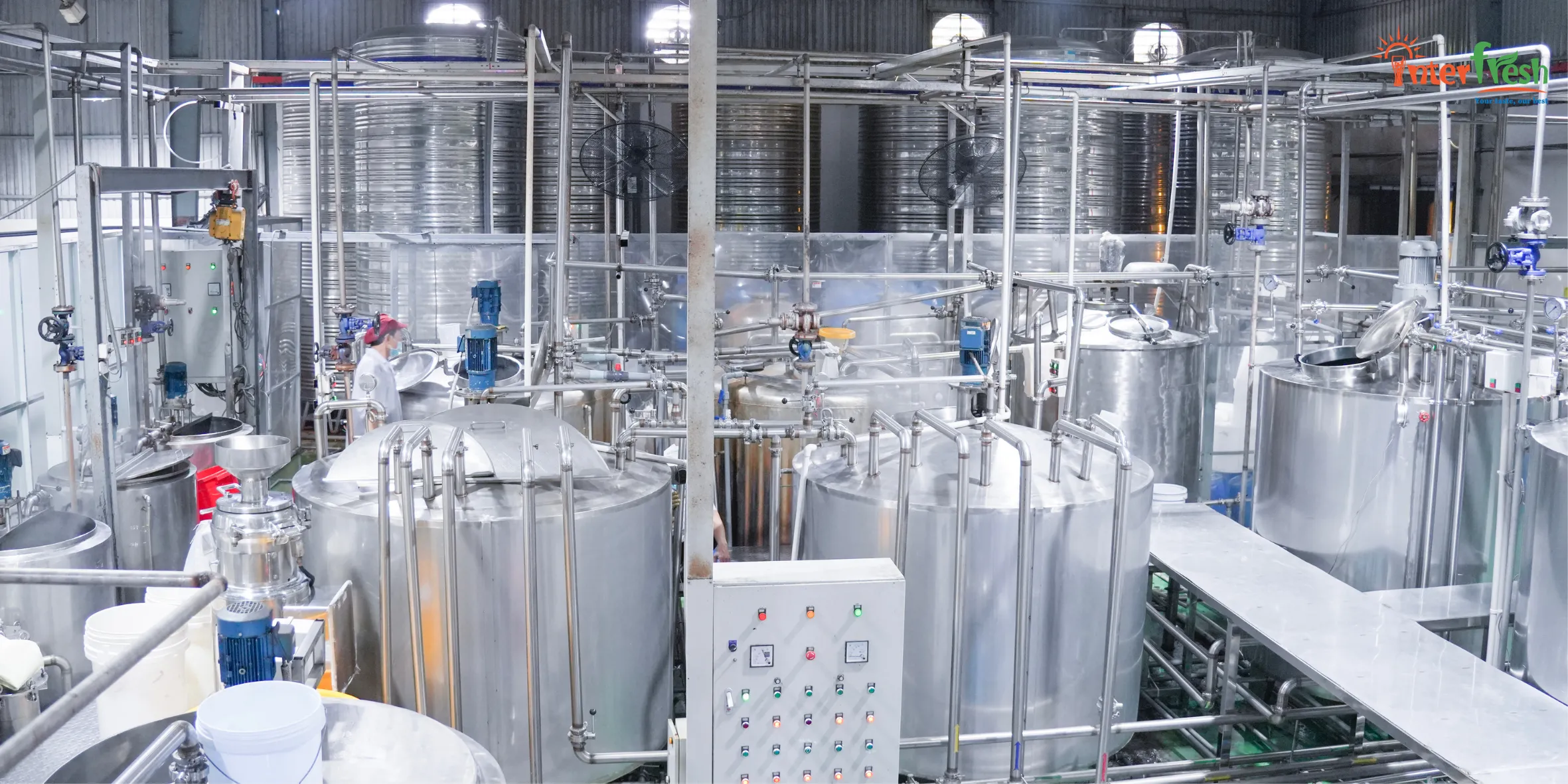
Interfresh’s sparkling coconut water contains up to 95% natural ingredients, in two forms: original coconut water, or coconut water blended with juice. The remaining 5% or so keeps quality stable, for example vitamin C as an antioxidant.
- Work directly with our factory, no middlemen: 12 production lines across 35,000 m², capacity above 100 million units per year.
- ISO 22000, HACCP, GMP, HALAL and SGS certifications; FDA-registered facility.
- Exporting since 2012, including to the US.
- Long-term grower partnerships keep raw-material freshness consistent.
- Four-step OEM process: choose your product, customize the formula, approve samples, then production and delivery. Samples in 10-14 business days.
To discuss a sparkling coconut water specification, contact our export team, or browse our sparkling drinks and coconut water OEM ranges.
Contact export team Sparkling drinks OEM Coconut water OEM
Frequently Asked Questions
What is sparkling coconut water?
Coconut water carbonated with CO₂, sometimes blended with fruit juice or flavoring. It keeps the natural sweetness of coconut water and adds soft-drink fizz, usually in aluminum cans as a lower-sugar alternative to soda.
Is sparkling coconut water shelf-stable?
Yes. Interfresh’s products are stored at ambient temperature with a shelf life of 12-18 months.
Does carbonation change the electrolytes in coconut water?
Dissolving CO₂ does not add or remove minerals. Diluting with water or other ingredients changes the nutrition panel, so check the final specification.
Why is it harder to make than still coconut water?
Three challenges combine: a low-acid, perishable base, a pressurized can, and a delicate flavor that both carbonation and heat can affect.
Does sparkling coconut water need preservatives?
Not necessarily. With a validated process, such as mild acidification plus UHT or tunnel pasteurization, it can be shelf-stable without added preservatives. Any acidulant or vitamin C must still be declared on the label.
What can sizes are common?
Single-serve cans, typically 250 ml and 330 ml. Your sales channel and price tier should drive the choice.
What is the MOQ for OEM sparkling coconut water?
MOQ depends on can size, flavor and whether you use custom-printed cans or sleeves. Ask any supplier for both the minimum production run and the printing minimum, which is often the larger constraint. At Interfresh, MOQ is a 20ft container
Sources
- Arizton, “U.S. Coconut Water Market – Focused Insights 2024-2029”
- ASINSIGHT, US best-seller listings for coconut-flavored sparkling waters (June-July 2026)
- BevNet, Vita Coco launches sparkling line at Kroger (2018)
- BevNET, Coaqua rebrand and Sparkling launch (2025)
- Food Dive, Good Nut by Gopuff and Tom Brady (June 10, 2026)