
The global beverage industry in 2026 stands as one of the most dynamic and resilient sectors in the world economy. Valued at well over $2.1 trillion, it continues to grow steadily thanks to rapid urbanization, rising disposable incomes in emerging markets, and an ever-increasing consumer focus on health, wellness, and sustainability. From iconic soft drinks and energy boosters to functional juices, organic coconut water, and premium hydration solutions, beverages have become an essential part of daily life for billions of people.
Today’s consumers are far more discerning than in previous years. They no longer accept beverages loaded with artificial additives and excessive sugar. Instead, they actively seek clean-label products, functional benefits (such as gut health, immune support, and natural energy), sustainable packaging, and authentic flavors that reflect real ingredients and ethical sourcing. This fundamental shift has created both enormous opportunities and significant challenges for industry players — from the largest multinational giants to agile, specialized exporters like Interfresh Food & Beverage.
Table of Contents
- 1 Why the Beverage Industry Continues to Thrive in 2026
- 2 The Top 10 Largest Beverage Companies in the World in 2026
- 3 Scale vs. Specialization: Where Interfresh Fits In
- 4 Key Trends Shaping the Beverage Industry in 2026 and Beyond
- 5 How to Choose the Right Beverage Partner in 2026
- 6 Interfresh Product Highlights Ready for Global Markets
- 7 Frequently Asked Questions (FAQs)
Why the Beverage Industry Continues to Thrive in 2026
The beverage sector’s remarkable growth is driven by several powerful macro trends. First, the global wellness movement has transformed how people choose what they drink. Functional beverages — those offering added health benefits beyond basic hydration — are experiencing explosive demand. Products enriched with probiotics, adaptogens, vitamins, and natural antioxidants are no longer niche; they have moved into the mainstream.
Second, sustainability has become a non-negotiable requirement. Consumers and regulators alike demand traceable supply chains, recyclable or biodegradable packaging, and reduced carbon footprints. Brands that fail to adapt risk losing market share. Third, the rise of e-commerce and direct-to-consumer channels has made it easier for smaller, specialized producers to reach global audiences, leveling the playing field against traditional giants.
In this competitive environment, the largest beverage companies leverage their massive scale, global distribution networks, and heavy marketing budgets. However, they often struggle with flexibility and the ability to deliver truly natural, preservative-free products at speed. This is exactly where specialists like Interfresh — a Vietnam-based exporter — are finding significant success by focusing on purity, tropical authenticity, and B2B customization.
The Top 10 Largest Beverage Companies in the World in 2026
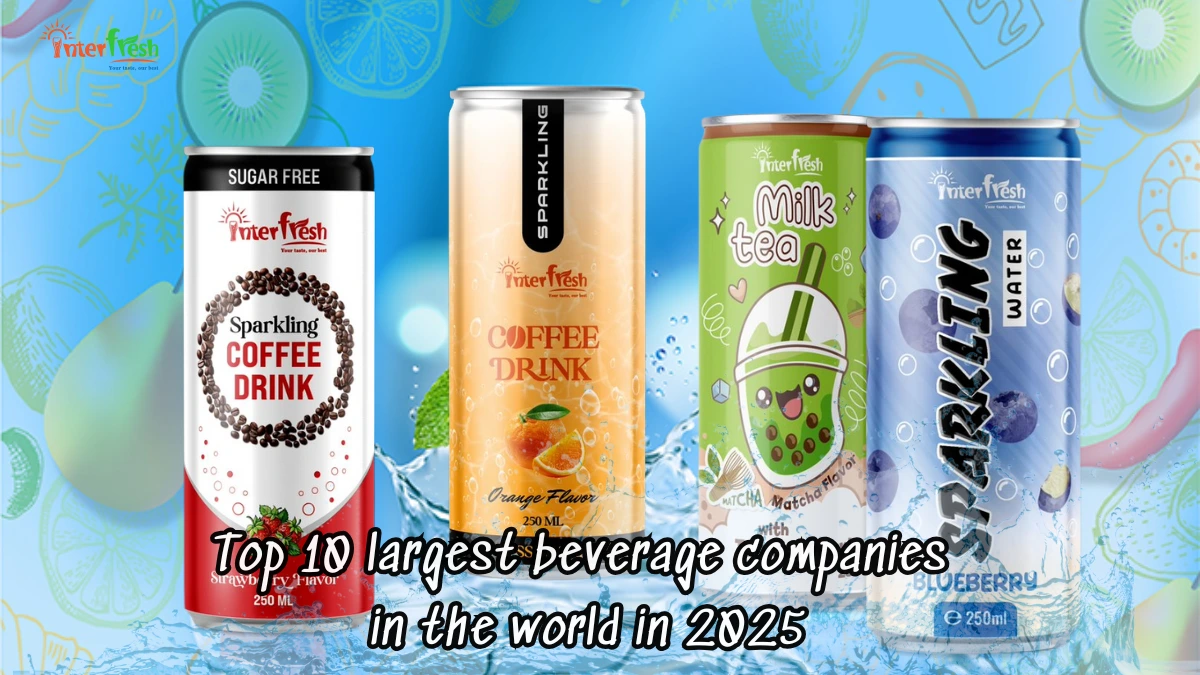
Below is a detailed look at the current leaders, ranked primarily by beverage-related revenue, global influence, and market adaptability in 2026:
- PepsiCo – With total revenue approaching $94 billion, PepsiCo remains a diversified titan. Its beverage portfolio includes Pepsi, Mountain Dew, Gatorade (sports drinks), and Tropicana (juices). The company has invested heavily in zero-sugar variants and functional beverages, but its broad focus sometimes limits depth in ultra-premium natural segments.
- The Coca-Cola Company – Generating approximately $48 billion in beverage revenue, Coca-Cola continues to dominate with its iconic soft drink brands (Coca-Cola, Sprite, Fanta) and expanding juice lines through Minute Maid. In 2026, the company is aggressively pushing sustainable packaging initiatives and low- or zero-sugar innovations to meet changing consumer expectations.
- Anheuser-Busch InBev (AB InBev) – The world’s largest brewer with beverage revenue near $59 billion. Its flagship brands — Budweiser, Stella Artois, and Corona — dominate the alcoholic segment. AB InBev is also expanding its low- and no-alcohol portfolio to capture health-conscious drinkers.
- Nestlé – A leader in coffee (Nescafé), ready-to-drink teas, and plant-based milk alternatives. Nestlé’s strength lies in its innovation around functional and premium hydration products, though its vast size can slow response to fast-moving niche trends.
- Heineken – Known for its crisp lagers and strong presence in Europe and Asia. The company is successfully growing its low-alcohol and non-alcoholic beer lines in response to moderation trends.
- Keurig Dr Pepper – Combines soft drinks, juices, and revolutionary coffee systems. It maintains solid strength in the North American market while expanding flavored and functional offerings.
- Diageo – The premium spirits giant behind Johnnie Walker, Smirnoff, and Guinness. It focuses on luxury positioning and ready-to-drink cocktails.
- Suntory Holdings – Represents Japanese precision and quality across whiskies, soft drinks, and teas, competing effectively in both Asian and Western markets.
- Danone – Specializes in premium bottled water (Evian, Volvic) and dairy-based functional drinks focused on gut health.
- Monster Beverage Corporation – Dominates the high-energy drink category with bold branding targeted at younger, performance-oriented consumers.
These giants excel in scale, distribution power, and brand recognition. However, many still depend on concentrate-based formulations and conventional ingredients, creating a clear opening for companies that prioritize 100% natural, preservative-free, and exotic flavor profiles.
Scale vs. Specialization: Where Interfresh Fits In
While the top 10 beverage companies control vast market share through volume and visibility, a significant and fast-growing segment of the market is shifting toward authenticity, purity, and customization. Importers, retailers, and private-label brands are actively seeking suppliers who can deliver clean-label products without compromising on taste, traceability, or speed to market.
Interfresh Food & Beverage, based in Vietnam — one of the world’s most abundant sources of tropical fruits — has positioned itself perfectly to meet this demand. Exporting to more than 80 countries, Interfresh specializes in 100% natural, preservative-free beverages that highlight the rich biodiversity of Vietnam.
Its core product lines include:
- Organic Coconut Water: Naturally hydrating, rich in electrolytes, and available in pure form or with subtle natural flavors such as pineapple. Sourced sustainably from Vietnamese coconut plantations, it appeals strongly to health-conscious consumers seeking clean hydration.
- Preservative-Free Fruit Juices: Made from real fruit — mango, pineapple, orange, and signature tropical blends. Unlike many mass-market juices that rely on concentrates, Interfresh juices deliver fresh, authentic taste and full nutritional value.
- Aloe Vera Drinks: A rising star in 2026, these functional beverages support digestion, skin health, and overall wellness — categories experiencing double-digit growth globally.
- Functional & Wellness Lines: Including kombucha and other probiotic-rich options that align with the booming gut-health trend.
Beyond retail products, Interfresh’s greatest strength lies in its **B2B capabilities**. The company offers comprehensive OEM and ODM services, allowing businesses to develop custom private-label beverages tailored to specific market needs, flavor profiles, and packaging requirements. All products meet stringent international standards, including Halal, ISO 22000, and FDA compliance. Combined with recyclable packaging and ethical sourcing practices, Interfresh delivers a complete solution that many larger corporations cannot match in terms of flexibility and speed.
Key Trends Shaping the Beverage Industry in 2026 and Beyond
Several powerful trends are redefining the competitive landscape:
- Health & Functional Innovation: Consumers want beverages that actively contribute to wellbeing — immune support, better digestion, natural energy, and beauty-from-within benefits. Interfresh’s aloe vera and coconut water lines directly address these demands.
- Sustainability & Transparency: Traceable ingredients, reduced plastic use, and carbon-conscious supply chains are now baseline expectations. Interfresh’s Vietnam-based, orchard-to-bottle model provides clear traceability that resonates with eco-aware buyers.
- Premiumization and Exotic Flavors: Shoppers are willing to pay more for authentic, tropical taste experiences. Vietnam’s mango, pineapple, and coconut offerings give Interfresh a natural competitive advantage in this space.
- Private Label Growth: Retailers and brands increasingly want to launch their own high-margin beverage lines. Interfresh’s OEM/ODM services enable fast, cost-effective market entry without requiring massive capital investment in production facilities.
How to Choose the Right Beverage Partner in 2026
For importers, distributors, and brand owners, the decision goes far beyond price. Key considerations include:
- Product purity and ingredient quality
- Certification and regulatory compliance
- Supply chain reliability and lead times
- Customization capabilities for private label
- Alignment with sustainability and health trends
In these areas, Interfresh consistently stands out as a strategic partner for businesses looking to differentiate themselves in a crowded market.
Interfresh Product Highlights Ready for Global Markets
Interfresh offers a versatile and high-quality portfolio designed to meet diverse consumer needs:
- Organic Coconut Water – pure hydration with natural electrolytes
- 100% Fruit Juices – mango, pineapple, orange, and exotic tropical blends
- Aloe Vera Drinks – functional beverages supporting digestion and skin vitality
- Specialty wellness lines including kombucha variants
Whether you are stocking retail shelves, building a private-label brand, or supplying foodservice channels, Interfresh provides consistent quality, competitive pricing, and the flexibility modern markets demand.
Discover the complete range and explore partnership opportunities at interfresh.com.vn.
Frequently Asked Questions (FAQs)
- 1. What are the world’s largest beverage companies in 2026?
- The top players include PepsiCo, The Coca-Cola Company, AB InBev, Nestlé, Heineken, and others, leading primarily through massive scale and broad portfolios.
- 2. How does Interfresh compare to these global giants?
- While smaller in total revenue, Interfresh excels in specialization — delivering 100% natural, preservative-free tropical beverages with exceptional B2B customization capabilities that many larger companies cannot easily replicate.
- 3. Which beverage categories are growing fastest in 2026?
- Functional drinks (gut health, immune support), natural hydration products (coconut water, aloe vera), zero-sugar options, and authentic exotic fruit juices are among the strongest performers.
- 4. Why should importers and brands choose Interfresh?
- Interfresh offers superior purity, full international certifications, sustainable practices, competitive pricing, and flexible OEM/ODM services — making it an ideal partner for developing premium natural beverage lines.
- 5. Where can I purchase or partner with Interfresh?
- Products are available through interfresh.com.vn, major global marketplaces, and direct B2B export partnerships.