
Basil seed drinks have quietly become one of the fastest-growing functional beverage categories in global B2B trade. From health food retailers in the United States to hypermarket chains across the Middle East, buyers are actively sourcing this product from Vietnam. Yet most arrive without a clear picture of how the supply chain works, what separates a serious Basil Seed Drink OEM Manufacturer from a trading company, or how to evaluate the right Basil Seed Drink OEM Manufacturer for their market.
This guide covers everything a bulk buyer, distributor, or private label brand owner needs to know before sending the first RFQ to a trusted Basil Seed Drink OEM Manufacturer in Vietnam.
Table of Contents
- 0.1 What Is a Basil Seed Drink and Why Is It a High-Value Export Category?
- 0.2 The Interfresh Advantage: Why Source From a Dedicated Vietnam Basil Seed Drink OEM Manufacturer?
- 1 Basil Seed Drink OEM Manufacturing in Vietnam: How the Process Works
- 2 Minimum Order Quantities: What to Expect from a Vietnam Basil Seed Drink OEM Manufacturer
- 3 Certifications That Matter for Global Basil Seed Drink Distribution
- 4 Private Label Basil Seed Drink: Building Your Own Brand from Vietnam
- 5 Target Markets and Buyer Profiles for Basil Seed Drink OEM
- 6 How to Evaluate and Qualify a Basil Seed Drink OEM Manufacturer
- 7 Pricing Transparency: What Drives the Cost of Basil Seed Drink OEM?
- 8 FAQs
- 9 References
- 10 Ready to Source Basil Seed Drinks from a Certified Vietnam OEM Manufacturer?
What Is a Basil Seed Drink and Why Is It a High-Value Export Category?
Basil seed drinks are beverages containing hydrated seeds of Ocimum basilicum, suspended in flavored liquid — typically fruit juice or coconut water bases. When soaked in water, basil seeds expand to roughly 30 times their original size, forming a translucent gel coating. This gives the drink a distinctive texture and visual appeal that is nearly impossible to replicate with any other ingredient.
From a commercial standpoint, basil seed drinks occupy a strong position for any Basil Seed Drink OEM Manufacturer:
- Functional appeal. The seeds are naturally high in fiber, omega-3 fatty acids, and antioxidants — attributes that align directly with the clean-label and wellness trends driving growth in the USA, EU, and GCC markets in 2026.
- Shelf stability. Unlike fresh juice, a properly formulated basil seed drink in Tetra Pak or PET packaging carries an 18 to 24-month shelf life without refrigeration — reducing logistics costs for importers.
- Flavor flexibility. The neutral seed flavor pairs with tropical fruit profiles including lychee, strawberry, mango, passion fruit, and coconut, making it adaptable for regional taste preferences.
- Price positioning. The product sits above commodity carbonated drinks but below premium cold-pressed beverages — a sweet spot for mid-market retail and food service distribution.
According to updated 2026 market data, the global functional drinks market continues its strong trajectory toward USD 279+ billion by 2030, with basil seed drinks gaining share within the functional and seed-based beverage segment. Asia-Pacific remains the primary production hub, and Vietnam has solidified its position as the dominant sourcing country for Basil Seed Drink OEM Manufacturer operations. This combines agricultural access to raw materials, competitive production costs, and an expanding base of ISO and FSSC-certified beverage factories.
Working with a dedicated Basil Seed Drink OEM Manufacturer in Vietnam provides clear advantages over trading intermediaries for importers and distributors seeking reliable supply.
The Interfresh Advantage: Why Source From a Dedicated Vietnam Basil Seed Drink OEM Manufacturer?
Not all suppliers who list basil seed drinks are actual manufacturers. A significant portion of Vietnamese suppliers on B2B platforms are trading companies that source finished goods from factories and resell them — adding cost and removing direct quality accountability.
Working with a dedicated Basil Seed Drink OEM Manufacturer provides several structural advantages:
- Direct factory pricing. No intermediary margin. MOQ negotiations happen at the production level, not the trading level.
- Formula ownership. A genuine Basil Seed Drink OEM Manufacturer develops or adapts formulations based on your target market’s regulatory requirements, flavor preferences, and labeling standards.
- Quality control at origin. Buyers can audit the actual production line, ingredient sourcing, and in-process quality checks. Third-party audits (BRC, FSSC 22000, SQF) are verifiable against the factory’s certification, not a broker’s claim.
- Lead time certainty. Direct relationships with the Basil Seed Drink OEM Manufacturer give buyers accurate scheduling windows — critical when coordinating container bookings, retailer shelf dates, and promotional launches.
- Regulatory documentation. A qualified Basil Seed Drink OEM Manufacturer issues genuine Certificates of Analysis, Certificate of Origin, Halal or Organic certificates, and Health Certificates directly from the producing facility.
Basil Seed Drink OEM Manufacturing in Vietnam: How the Process Works
Understanding the production process helps buyers ask the right questions and identify red flags during supplier evaluation when partnering with a Basil Seed Drink OEM Manufacturer.
Stage 1: Seed Sourcing and Inspection
High-quality basil seeds are sourced domestically from the Mekong Delta and Central Highlands regions, or imported from India and Thailand depending on crop season. A qualified Basil Seed Drink OEM Manufacturer maintains supplier specifications for seed purity, moisture content, and gel expansion ratio. Buyers should request the seed specification sheet as part of the initial sample process.
Stage 2: Formula Development and Customization
OEM orders typically begin with formula selection. Most basil seed drink OEM manufacturers offer a range of standard bases (sweetness level, fruit profile, seed concentration) that can be adjusted for:
- Sugar content (reduced sugar, zero sugar, or natural sweetener formulas)
- Fruit juice percentage (5%, 10%, or 25% real juice)
- Seed density (visual impact vs. texture preference)
- pH and preservation system (to meet specific market requirements)
For private label buyers launching a branded product, this stage also involves flavor testing, sample production, and iterative refinement before bulk sign-off.
Stage 3: Production and Filling
Vietnam-based OEM facilities operate UHT (Ultra High Temperature) or hot-fill systems depending on the packaging format. Common packaging formats for basil seed drinks include:
- Tetra Pak (250ml, 330ml, 500ml)
- PET bottle (290ml, 300ml, 500ml, 1L)
- Aluminum can (250ml, 330ml)
- Glass bottle (for premium positioning)
Each format has different minimum order quantities, lead times, and logistics implications. A buyer targeting Europe, for example, may favor Tetra Pak for its recyclability and EU consumer preference for aseptic packaging, while a buyer for GCC markets may opt for PET with Halal-certified production run documentation.
Stage 4: Quality Control and Certification
A professional basil seed drink OEM manufacturer runs the following quality checkpoints before shipment:
- Raw material testing (COA from seed supplier, sugar, fruit concentrate)
- In-process checks during filling (seal integrity, Brix, pH)
- Finished product testing (microbiology, shelf-life verification)
- Pre-shipment inspection (third-party or in-house)
Buyers should request batch COAs as part of standard shipment documentation. For regulated markets (FDA-registered imports into the USA, EFSA-compliant products in the EU, SFDA-cleared products in Saudi Arabia), the factory’s registration status is a non-negotiable qualifier.
Stage 5: Export and Shipping
Standard FCL (Full Container Load) shipments from Ho Chi Minh City port to major markets:
| Destination | Estimated Transit Time |
| USA (West Coast) | 14 to 18 days |
| USA (East Coast) | 25 to 30 days |
| UK / Germany | 22 to 28 days |
| Australia | 10 to 14 days |
| UAE / Saudi Arabia | 14 to 18 days |
| Singapore | 3 to 5 days |
Most OEM orders are quoted on FOB Ho Chi Minh City or CIF terms. Buyers with established freight forwarder relationships typically prefer FOB. Those new to Vietnam sourcing may request CIF to simplify logistics management.
Minimum Order Quantities: What to Expect from a Vietnam Basil Seed Drink OEM Manufacturer
MOQ structures vary by factory, packaging format, and product complexity. General reference ranges for basil seed drink OEM orders out of Vietnam in 2026:
Standard PET bottle (290ml to 500ml): Typically 3,000 to 5,000 cartons per SKU for standard flavors. New flavor development or custom formulas may require 5,000 to 10,000 cartons as a first production run to cover formula and packaging setup costs.
Tetra Pak: MOQs tend to be higher due to filling line setup — typically 5,000 to 10,000 cartons per run. However, per-unit costs drop significantly at scale.
Aluminum can: Can require 10,000 to 20,000 units minimum due to can procurement lead times and filling line changeovers.
Private label (custom label on existing formula): Some basil seed drink OEM manufacturers accommodate lower MOQs of 1,000 to 2,000 cartons for private label programs using existing stock formulations and standard packaging with custom labels applied.
Buyers should clarify MOQ at the formula stage, not just the ordering stage, as formula-specific setup costs can affect minimum volumes.
Certifications That Matter for Global Basil Seed Drink Distribution
Certification requirements vary significantly by destination market. Buyers sourcing from a basil seed drink OEM manufacturer in Vietnam should confirm the following based on their target region:
For USA import:
- FDA facility registration (required for any food exporter to the US)
- HACCP certification
- Nutrition Facts panel compliant with FDA 21 CFR labeling requirements
- Optional but valuable: USDA Organic, Non-GMO Project Verified
For EU / UK import:
- HACCP and food safety management system (ISO 22000 or FSSC 22000)
- EU labeling compliance (nutrition declaration per EC 1169/2011)
- Phytosanitary certificate for seed-containing products
- Optional: EU Organic (Regulation EU 2018/848)
For GCC / Middle East markets:
- Halal certification (JAKIM, MUI, or GCC-recognized body)
- SFDA registration (Saudi Arabia)
- ESMA certification (UAE)
- COO (Certificate of Origin) notarized by the Vietnam Chamber of Commerce
For Australia:
- FSANZ food standards compliance
- Label compliance with Australia New Zealand Food Standards Code
- Biosecurity import declaration for seed-containing beverages
A qualified basil seed drink OEM manufacturer maintains current certifications and can provide copies upon request. Buyers should verify certificate validity dates and issuing body credibility.
Private Label Basil Seed Drink: Building Your Own Brand from Vietnam
The private label route is the most popular entry point for new beverage brands, regional distributors looking to expand margins, and retailers launching house brand lines.
A Vietnam-based OEM partner enables private label buyers to:
Select from existing proven formulas. No R&D investment required. Formulas with established shelf-life data, consumer acceptance records, and regulatory compliance documentation are ready for customization.
Apply full custom branding. Label design, bottle shape (within available molds), cap color, and secondary packaging (carton design, shrink wrap) can all be customized.
Enter the market faster. Private label programs using existing formulas typically reach production-ready status within 30 to 60 days of sample approval, compared to 90 to 180 days for fully custom formulations.
Control positioning and pricing. Owning the brand means controlling the retail shelf price, promotional strategy, and distribution exclusivity — creating differentiation that trading company sourcing cannot replicate.
For buyers building a basil seed drink private label line, key decisions include:
- Flavor lineup (starting with 2 to 3 SKUs is recommended for launch efficiency)
- Packaging format and size
- Sweetener system (cane sugar, stevia, monk fruit, or zero sugar)
- Fiber and seed density claim strategy
- Market-specific label requirements
Target Markets and Buyer Profiles for Basil Seed Drink OEM
Different markets have distinct demand patterns. Understanding where basil seed drink aligns commercially helps OEM buyers position their procurement strategy correctly.
USA and Canada
The US health food retail channel (natural grocery, specialty chains, Amazon) is the primary entry point. Buyers include natural food distributors, supplement brands extending into beverage, and direct-to-consumer brands. Key requirements: clean label, FDA compliance, clear fiber or functional claims, and competitive price versus domestic alternatives.
United Kingdom and Europe
UK and EU buyers tend to prioritize sustainability credentials alongside function. Tetra Pak packaging, EU Organic options, and EVFTA (EU-Vietnam Free Trade Agreement) tariff advantages make Vietnam a cost-competitive source. Buyers include food importers supplying major grocery chains, ethnic food distributors, and private label programs for mid-market retailers.
Middle East and GCC
The GCC market is growing rapidly, with demand particularly strong in Saudi Arabia, UAE, and Kuwait. Halal certification is a hard requirement. The texture and novelty of basil seed drinks aligns well with GCC consumer preferences for beverage variety. Buyers here include HORECA distributors, supermarket importers, and food service companies.
Southeast Asia
Singapore, Malaysia, and Indonesia represent mature markets for basil seed drinks — basil seed-based beverages (often called “sabja” or “selasih” drinks) have established consumer awareness. Buyers are typically looking for price-competitive wholesale supply or private label programs to compete against regional brands.
India
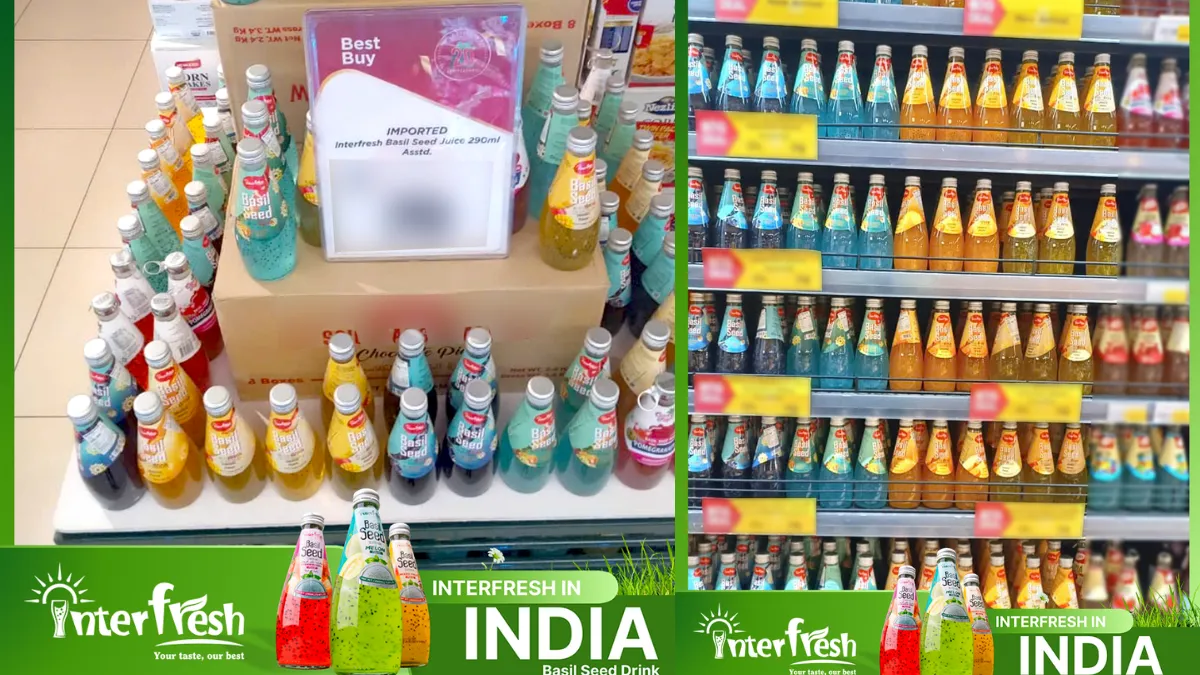
India is an emerging B2B opportunity. Basil seeds (locally called “sabja” or “tukmaria”) are culturally familiar ingredients. The demand for packaged basil seed drinks is growing in urban retail. Buyers include regional beverage distributors and food service importers.
How to Evaluate and Qualify a Basil Seed Drink OEM Manufacturer
Before committing to a production order, buyers should complete a structured qualification process:
Step 1: Document verification. Request factory registration, current certifications (HACCP, ISO, Halal, FDA), and export history references. Verify certificate validity directly with issuing bodies where possible.
Step 2: Sample request. Order commercial samples of the specific formula you intend to source. Test for flavor accuracy, seed texture, Brix consistency, and packaging seal quality. Send samples to a third-party lab for full microbiological and nutritional analysis.
Step 3: Factory audit or virtual walkthrough. Visit the facility or request a live video walkthrough of the production line. Assess cleanliness, production capacity, cold chain capability (if applicable), and quality control documentation systems.
Step 4: Commercial terms discussion. Clarify MOQ, pricing structure, lead time from purchase order to shipment-ready, payment terms, and claims/quality dispute process.
Step 5: Pilot order. Before committing to a full container, run a small trial order to verify production consistency against the approved sample, on-time shipment performance, and documentation accuracy.
Pricing Transparency: What Drives the Cost of Basil Seed Drink OEM?
Key cost drivers when quoting with a Basil Seed Drink OEM Manufacturer include:
Seed cost. Basil seed prices fluctuate based on crop seasons in India and Vietnam. A reliable manufacturer maintains buffer stock to protect buyers from spot price spikes.
Fruit concentrate or juice content. Higher real juice percentages increase raw material cost. Concentrates sourced from Vietnam (calamansi, passion fruit, lychee) are typically more cost-competitive than imported concentrates.
Packaging format. Tetra Pak carries a premium over PET due to filling line costs and packaging material sourcing. Aluminum can is typically the highest packaging cost per unit.
Order volume. Per-carton pricing drops significantly between 3,000 cartons and 10,000 cartons. Buyers should discuss volume pricing tiers during the initial RFQ stage.
Certifications required. Halal-certified production runs, Organic-certified input sourcing, or non-GMO documentation add modest cost to the production run.
Labeling and custom packaging. Full custom label with design, artwork, and print setup adds a one-time cost (typically covered by the supplier on repeat orders above a volume threshold).
Buyers should request FOB pricing inclusive of all standard export documentation. Hidden cost items to clarify upfront include phytosanitary certificate fees, fumigation (if required by destination country), and Halal inspection fees.
FAQs
What is the shelf life of basil seed drinks manufactured in Vietnam?
Standard Tetra Pak and PET-packaged basil seed drinks have a shelf life of 18 to 24 months from production date. Exact shelf life depends on the preservation system used (pasteurization method, pH, and packaging seal quality). Buyers should request official shelf-life study documentation from the manufacturer.
Can I get a custom flavor basil seed drink with my brand label?
Yes. Most established basil seed drink OEM manufacturers in Vietnam offer full custom flavor development alongside private label packaging. Common custom requests include specific fruit combinations, reduced sugar versions, or functional additions such as collagen or vitamin C.
What is the typical lead time for a basil seed drink OEM order?
For orders using existing formulas: 30 to 45 days from purchase order confirmation to shipment-ready. For new formula development: 60 to 90 days including sample development, approval, and production scheduling.
Is Halal certification available for basil seed drinks from Vietnam?
Yes. Several Vietnamese beverage manufacturers hold Halal certification from recognized bodies (MUI Indonesia, JAKIM Malaysia, or GCC-recognized certifiers). Buyers targeting GCC and Southeast Asian Muslim markets should confirm the specific issuing body and whether it is recognized in their target country.
What is the minimum order for a private label basil seed drink?
MOQs vary by manufacturer and format. PET bottle private label programs typically start from 3,000 cartons per flavor. Some manufacturers accommodate lower minimums of 1,000 to 2,000 cartons for standard formulas with custom labels.
Does Vietnam have regulatory advantages for exporting beverages to Europe?
Yes. The EU-Vietnam Free Trade Agreement (EVFTA), in force since 2020, reduces import tariffs on processed food and beverage products from Vietnam to the EU. This creates a measurable cost advantage for EU-based buyers sourcing from Vietnam compared to many competitor countries.
How do I verify that a Vietnamese supplier is a genuine manufacturer and not a trading company?
Request the Business Registration Certificate showing manufacturing activity (not just trading). Ask for the factory address and confirm it against the FDA or ISO audit address on the certificates. Request a virtual factory tour. Genuine manufacturers can show you the production line, filling equipment, and QC lab.
What packaging sizes are available for basil seed drink OEM orders?
Common commercial sizes: 290ml PET (single serve), 300ml PET, 330ml Tetra Pak or can, 500ml PET (larger single serve or family size), and 1L PET. Some manufacturers also offer 250ml formats for hospitality or children’s segments. Custom sizing may require new mold investment.
Are there seasonal supply constraints for basil seeds?
Basil seed supply from India (the primary global source) peaks from March to June post-harvest. Buyers planning large orders for Q4 delivery should confirm seed stock availability with their manufacturer by Q2. Vietnam-based manufacturers with domestic growing programs maintain more stable year-round supply.
Can I order a sample before committing to a full production run?
Yes. Reputable basil seed drink OEM manufacturers provide commercial samples (typically 10 to 24 bottles) at cost or against a sample fee that is credited on the first production order. Sample shipping is typically at buyer’s cost.
References
The following sources were consulted in preparing this guide and are recommended for buyers conducting independent market research:
- Grand View Research. Global Functional Drinks Market Size, Share & Trends Analysis Report, 2026–2033. https://www.grandviewresearch.com/press-release/global-functional-drinks-market
- Mordor Intelligence. Functional Beverage Market Size & Share Analysis – Growth Trends and Forecast (2026 – 2031). https://www.mordorintelligence.com/industry-reports/functional-beverage-market
- Vietnam Ministry of Industry and Trade (MOIT). Vietnam Food and Beverage Export Statistics 2025–2026. https://moit.gov.vn/en
- European Commission. EU-Vietnam Free Trade Agreement (EVFTA): Access2Markets Portal. https://trade.ec.europa.eu/access-to-markets/en/content/eu-vietnam-free-trade-agreement
- U.S. Food and Drug Administration. Foreign Supplier Verification Program (FSVP) and Food Facility Registration Requirements. https://www.fda.gov/food/importing-food-products-united-states/foreign-supplier-verification-programs-fsvp-food-importers
- ITPC Ho Chi Minh City. Vietnam Beverage Industry Export Overview 2025–2026. https://itpc.gov.vn
- Mintel Global New Products Database. Functional Beverage Launches: Basil Seed and Chia Seed Drinks Category Analysis, 2025–2026. (Available at: mintel.com)
- Euromonitor International. Soft Drinks in Asia Pacific: Emerging Formats and Functional Claims, 2026 Edition. (Available at: euromonitor.com)
- International Finance Corporation (IFC) – World Bank Group. Food Safety and Quality Standards in ASEAN Beverage Export Supply Chains, 2024–2026. https://www.ifc.org
- Gulfood Manufacturing. Middle East Beverage Import Trends and Halal Compliance Report 2026. https://www.gulfoodmanufacturing.com
Ready to Source Basil Seed Drinks from a Certified Vietnam OEM Manufacturer?
Interfresh Food and Beverage is a Vietnam-based basil seed drink OEM manufacturer with export programs to the USA, EU, Australia, Middle East, and Southeast Asia. Our production facility is certified to international food safety standards and capable of supporting private label programs, custom flavor development, and bulk wholesale supply.
Contact us to:
- Request a product sample
- Receive an OEM pricing quote
- Download our 2026 OEM Product Catalogue
- Book a virtual factory tour
[Request Free Sample] | [Download OEM Brochure] | [Contact Our Export Team]