
As a premier coconut water manufacturer in Vietnam, Interfresh delivers end-to-end OEM, ODM, and Private Label solutions. Utilizing advanced retort sterilization (121°C for 12 minutes) in premium aluminum cans, we produce pure/100% and fruit-blended coconut water with up to 24 months of shelf life, meeting strict international standards (FDA, ISO, HACCP, Halal).
Why Choose Interfresh as Your Coconut Water Manufacturer?
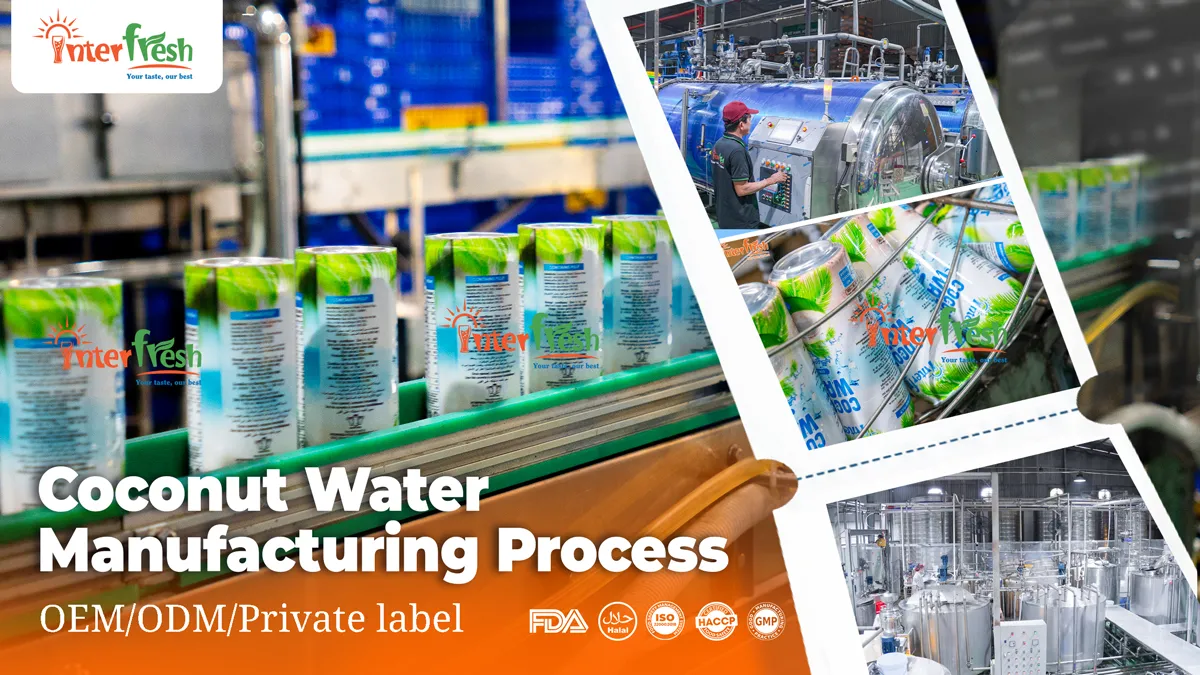
Vietnam is globally recognized as a top-tier sourcing hub for tropical beverages. Interfresh Food and Beverage Co., Ltd. stands as a leading coconut water manufacturer bridging international B2B buyers (distributors, wholesalers, and brand owners) with world-class production lines.
Moving beyond generic marketing, we provide absolute transparency into our formulation science, technical parameters, and rigorous quality control protocols to ensure seamless global supply chains.
Whether you are launching a new hydration line or expanding an established global distribution network, partnering with a dedicated OEM/ODM beverage manufacturer ensures consistent sensory profiles, predictable lead times, and competitive landed costs.
- Direct Sourcing Advantage: Proximity to Southern Vietnam’s fertile coconut belts (such as Ben Tre) ensures fresh raw material intake, preserving natural electrolytes and clean sweetness.
- End-to-End B2B Flexibility: From initial custom formulation and pilot sampling to high-speed master carton packaging and container consolidation, we streamline every stage of the supply chain.
Quick Facts & Technical Specifications (B2B Summary)
For procurement teams and QA/QC engineers evaluating a private label coconut water supplier, below are the core technical specifications and commercial capabilities for our canned coconut water lines:
| Parameter | Technical & Commercial Specification |
|---|---|
| Product Categories | Pure Natural Coconut Water, Coconut Water with Tender Coconut Pulp (03–05mm), and Fruit-Blended Coconut Water |
| Available Packaging | Aluminum Can Packaging: 500ml, 330ml Regular, 330ml Sleek, 250ml Slim, 250ml Low, and 180ml Tetra pak 330ml, 500ml, 1000ml PET bottle/Glass bottle |
| pH & Acidity Control | High pH (>5.0), ensuring microbiological safety and natural taste stability |
| Brix Level (Bx) | Standard 5.0 – 7.0°Bx (customizable >7.0°Bx based on target market preferences) |
| Shelf Life | Ambient shelf life (24 months) (or 18 months per specific market regulations) |
| Sterilization Technology | In-Container Retort Sterilization at 121°C for 12 minutes |
| Minimum Order Quantity (MOQ) | Flexible B2B tiers; supports multi-SKU container consolidation |
| Global Compliance | FDA compliance, HACCP & ISO 22000 certification, Halal certified beverage |
Which Treatment Technology Is Best for Coconut Water: Retort, Aseptic, or HPP?
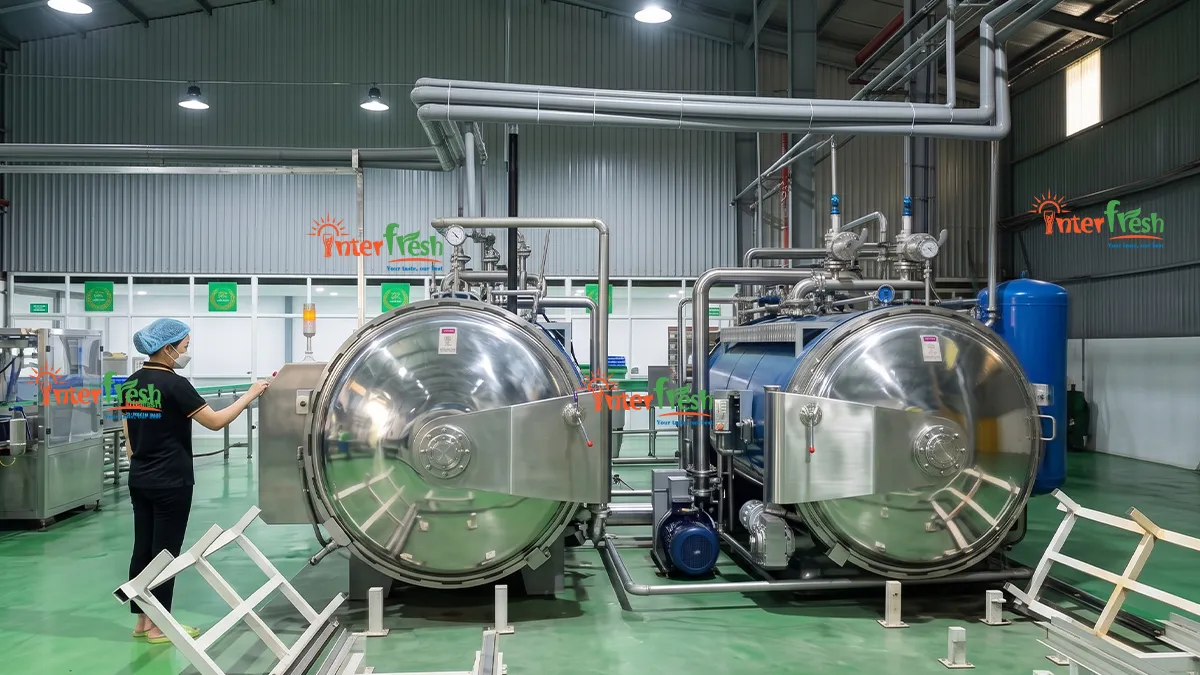
Choosing the right processing method is critical when partnering with a coconut water manufacturer. It directly impacts shelf life, cold-chain logistics, unit cost, and flavor retention. Below is an objective engineering comparison of the three primary industry technologies:
| Treatment Technology | Processing Mechanism | Shelf Life & Storage | Flavor & Nutritional Profile | Best Commercial Fit |
|---|---|---|---|---|
| In-Container Retort Sterilization (Interfresh Core Specialty) | Sealed aluminum cans are sterilized at 121°C for 12 minutes. This eliminates all vegetative spores and pathogens. | Ambient shelf life (24 months); zero cold-chain required. | Smooth, slightly toasted tropical profile; high batch-to-batch stability. | Mass retail, supermarkets, international wholesalers, and long-haul export markets. |
| Flash Pasteurization + Aseptic Filling | Rapid high-temperature heating, then aseptic filling into sterilized packaging in a sterile environment. | 12 – 18 months ambient storage. | Crisp, bright coconut flavor; minimal thermal degradation. | Mid-to-premium retail brands using Tetra Pak or aseptic PET lines. |
| High Pressure Processing (HPP) | Cold pasteurization using ultra-high hydrostatic pressure, without heat. | 45 – 60 days; requires strict refrigerated cold-chain (0–4°C). | Closest to fresh raw coconut water; retains heat-sensitive enzymes. | Niche organic brands, local chilled retail, and high-margin specialty cafes. |
Why Retort Aluminum Cans Dominate Global B2B Exports?
International importers often ship across continents. Retort sterilization in aluminum can packaging eliminates the high costs and spoilage risks of refrigerated freight. Aluminum also provides a 100% barrier against light and oxygen. This protects the delicate electrolyte balance and prevents premature oxidation throughout the 24-month lifecycle.
What Types of Coconut Water Does Interfresh Produce?

To serve diverse consumer segments across US, EU, and Asian markets, our capabilities as an experienced coconut water manufacturer include three distinct commercial lines:
- Pure Natural Coconut Water: Sourced directly from fresh Vietnamese coconuts, preserving natural electrolytes and a delicate sweet profile.
- Coconut Water with Pulp: Features tender coconut pieces sized between 03–05 mm, offering an enhanced texture for modern beverage lines.
- Fruit-Blended Coconut Water: Innovative hybrids combining pure coconut water base with tropical fruit juices (such as pineapple, mango, or lychee).
What Ingredients and Additives Are Used in Coconut Water Formulation?
- pH & Acidity Control: Coconut water naturally maintains a high pH (> 5.0), which is strictly controlled during processing to ensure structural integrity throughout its 24-month shelf life.
- Ingredients & Additives: Water, natural coconut water, optional coconut pulp, and sugar. Optional functional additives include Vitamin C, natural flavors, antioxidants used to preserve bright color during thermal processing, with full client advisories.
How Is Coconut Water Manufactured Step by Step?
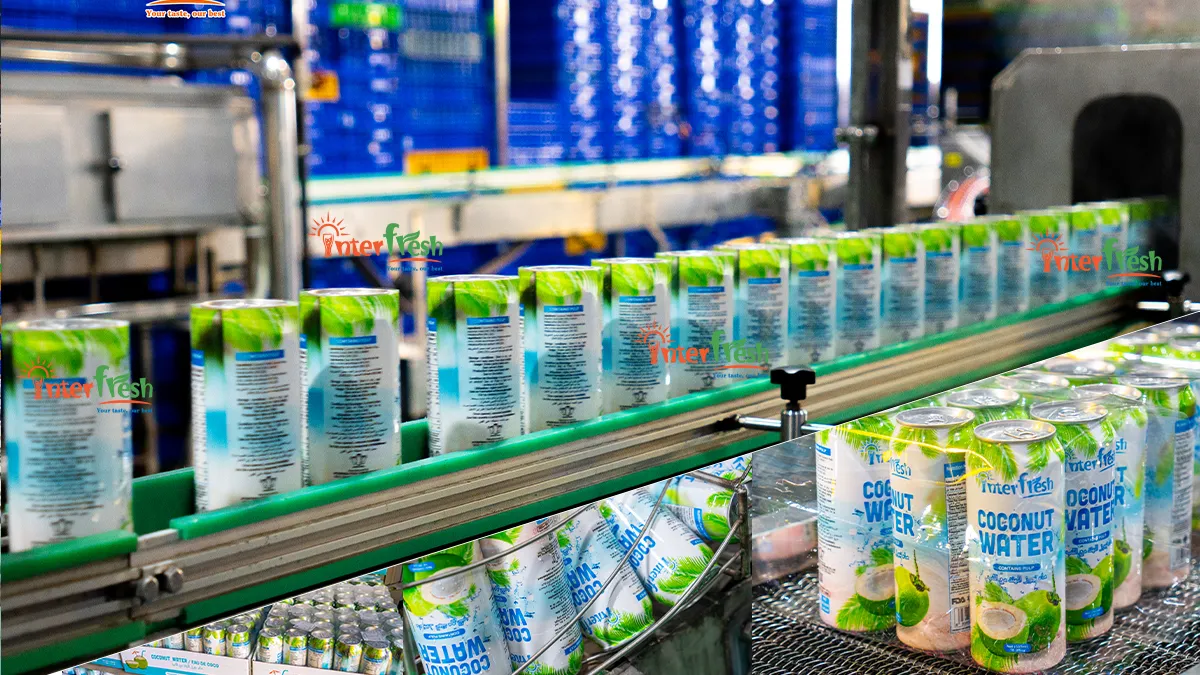
Every batch produced at our partner manufacturing facilities follows a strict, step-by-step industrial workflow to guarantee microbiological safety and maximum nutrient retention:
- Step 1 (Mixing & Dissolution): Water is pre-heated to 60–65°C to dissolve sugar, additives, and raw coconut water base with solubility checks.
- Step 2 (Flavor Integration): Natural flavorings and functional enhancers are precisely blended.
- Step 3 (Pulp Integration): Tender coconut pieces (03–05 mm) are hygienically introduced for pulp variants.
- Step 4 (Filling & Seaming): Automated high-speed filling into selected aluminum can formats under cleanroom standards.
- Step 5 (Retort Sterilization): Subjected to high-temperature retort sterilization at 121°C for 12 minutes, eliminating vegetative spores and pathogens.
- Step 6 (Rapid Cooling & Coding): Cans are rapidly cooled to 30–40°C using chlorinated cooling water. This halts thermal cooking. The cans are then dried and laser-coded with production and expiry dates.
- Step 7 (Labeling & Master Carton Packaging): Cans are fitted with high-resolution shrink sleeves or printed directly. They are then packed into export-grade master carton packaging.
- Step 8 (Quality Assurance & Export Release): Final laboratory testing against physical, chemical, and microbiological standards prior to warehouse release.
How Does Interfresh Keep Brix Consistent Across Seasons?
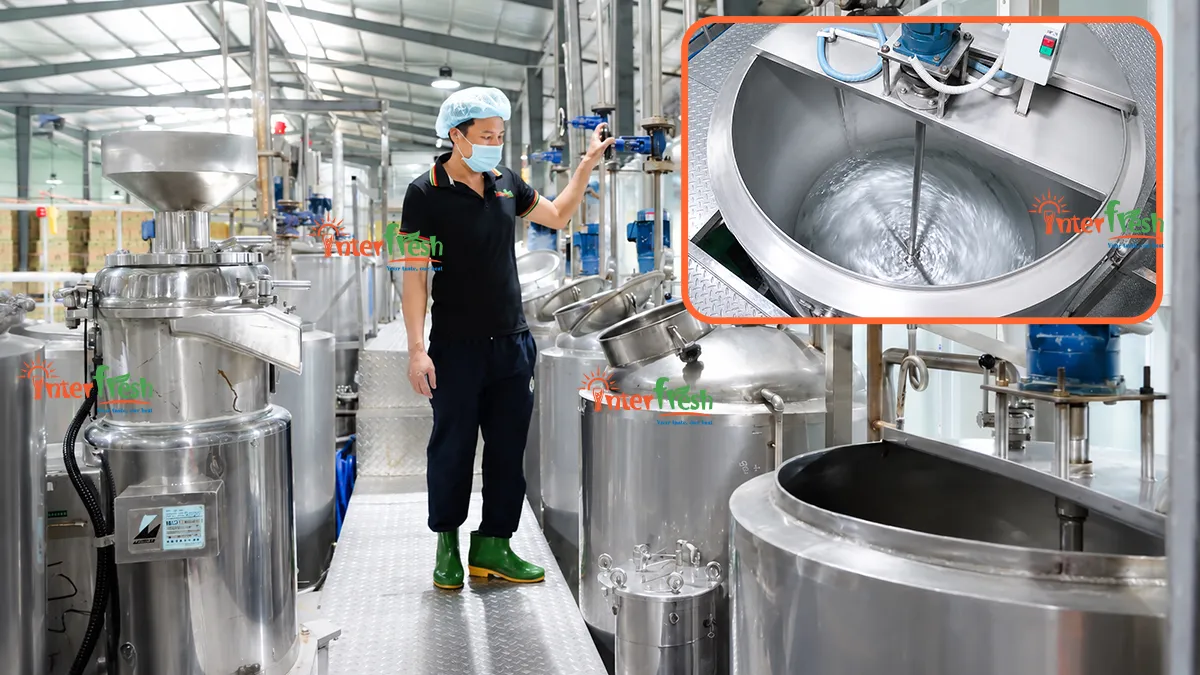
Seasonal variation is a primary operational risk for any B2B beverage exporter sourcing agricultural ingredients in Southeast Asia. Natural coconut water harvested in Vietnam’s rainy season typically has lower natural sugar levels than dry-season harvests.
Your 20th container should taste identical to your initial approved sample. To guarantee this, Interfresh implements strict seasonal standardization protocols:
- Rolling Blend Tanks & Standardization: Raw coconut water batches are standardized in temperature-controlled rolling blend tanks before formulation. This balances natural variations and holds target Brix levels (Bx) within a strict tolerance of ±0.3°Bx.
- Sensory Evaluation Panel: Before mass production begins, our internal sensory evaluation panel cross-checks every batch formula against the client’s signed golden sample.
- Retained Sample Library: We keep a dedicated retained sample library for every production lot throughout its entire ambient shelf life (24 months). This supports ongoing stability monitoring and full traceability.
Strict Quality Control & Laboratory Standards (COA Compliance)
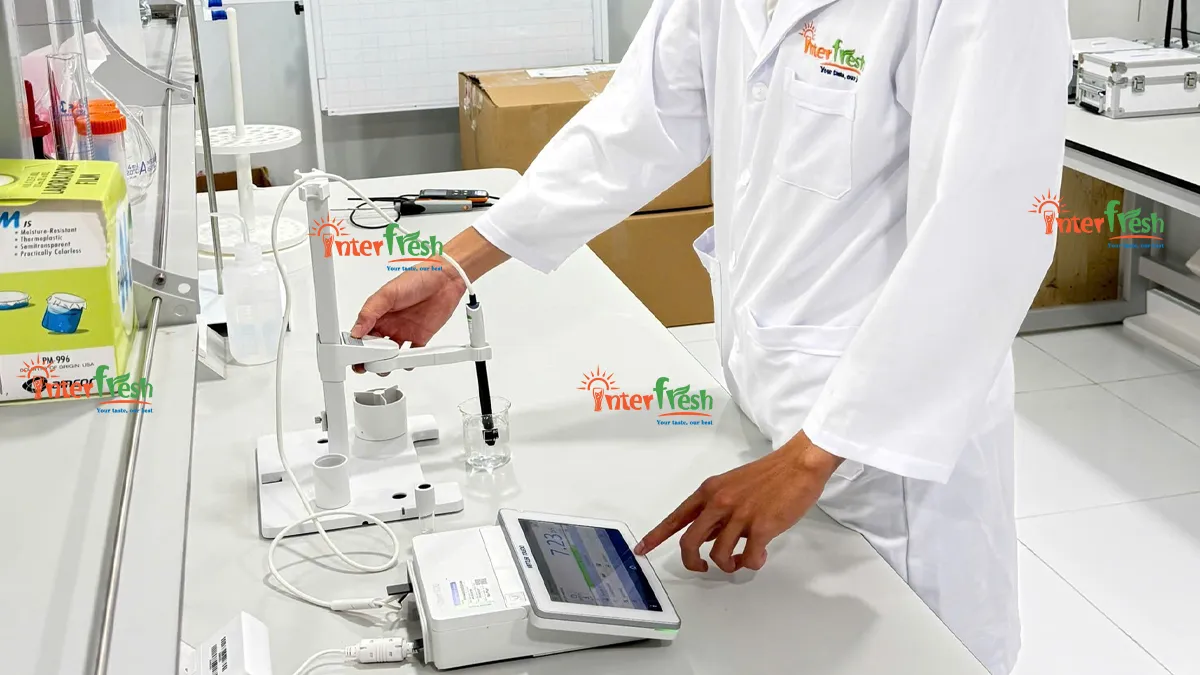
As a reliable OEM/ODM beverage manufacturer, our quality assurance framework operates on a strict “Zero-Defect Release” policy. Every export shipment includes a batch-specific Certificate of Analysis (COA). Internal and accredited third-party laboratories verify it
What Are the Microbiological and Heavy Metal Safety Limits?
- Total Plate Count: < 102 CFU/ml
- Coliforms: < 10 CFU/ml
- E. coli & Pathogens: Absent
- Heavy Metal Limits: Lead (Pb) < 0.050 mg/L, Cadmium (Cd) < 0.010 mg/L, Mercury (Hg) < 0.010 mg/L, Arsenic (As) < 0.010 mg/L.
How Does Interfresh Handle Sanitation and Corrective Actions?
- Clean-in-Place (CIP) Protocol: All mixing tanks, piping, and filling nozzles undergo automated Clean-in-Place (CIP) protocols. These include alkaline, acid, and hot water sanitization cycles. They run between every flavor changeover and production shift.
- Root-Cause Accountability: Specification deviations during production or transit are rare. If one occurs, our QA engineering team delivers a comprehensive root-cause analysis report within 48 hours. Immediate corrective action accompanies it.
Ready to launch or scale your private label coconut water line?
Connect directly with Interfresh’s international R&D and export specialists. Request technical data sheets (TDS), custom formulation samples, and competitive FOB/CIF quotations
Email: info@interfresh.com.vn
FAQ for B2B Buyers
Can we consolidate multiple beverage SKUs in a single container?
Yes, Interfresh fully supports multi-SKU container consolidation (e.g., mixing coconut water and aloe vera drinks) to optimize logistics for international distributors.
What export documentation is provided?
We supply a complete export dossier including Certificate of Analysis (COA), Certificate of Origin (C/O), Bill of Lading, Commercial Invoice, Packing List, and Phytosanitary certificates tailored to destination customs.