
Plain coconut water now fills most cooler shelves across Australia. Retail buyers are asking suppliers for a genuine point of difference, not another clear liquid. Coconut water with pulp answers that request with real texture inside a familiar, clean label. This guide walks through the exact specifications a distributor needs before placing an order.
Who this guide is for
  • Import and distribution teams evaluating a coconut water with pulp supplier for private label.
  • Wholesale buyers comparing packaging, MOQ and certification across Vietnam manufacturers.
  • Brand owners preparing an RFQ ahead of the Australian summer hydration season.

If you fit one of these groups, you are close to a sourcing decision, not early research. Proof matters more than a marketing pitch at this stage. You need exact packaging, minimum order quantity, certificates and lead time. You also want confidence that pulp stays evenly mixed after a long sea voyage. Every section below answers one of these points directly, using our own production data.


Why Australian Buyers Are Adding Coconut Water with Pulp

The Australian coconut water market was valued near 275 million US dollars in 2025. Growth is forecast at close to 14 percent per year through 2034, according to IMARC Group research. Plain, single ingredient coconut water already fills most shelves at major retailers. Distributors now need genuine texture difference to stand out from that crowd.
Coconut water with pulp meets that need without breaking the clean label promise buyers expect. It still reads as one recognizable ingredient list, which matters to Australian shoppers. Summer months from December to February bring the strongest demand for hydration drinks nationwide. A pulp product adds a filling, functional angle that plain water cannot offer on its own.

This is why many buyers expand beyond a single pure coconut water wholesale line into a textured variant.


What Real Coconut Pulp Adds to the Product

Our coconut water with pulp is made using young coconut water blended with three to five percent coconut meat. That meat comes from the same coconuts processed on our coconut water manufacturing line, not from a separate additive. This keeps the label simple and the sourcing traceable for your compliance team.

Buyers comparing this product against our standard pure coconut water wholesale range often choose pulp purely for the texture story. It gives retail buyers a new shelf talking point without a new ingredient risk.


Keeping Pulp Evenly Suspended During Production and Shipping
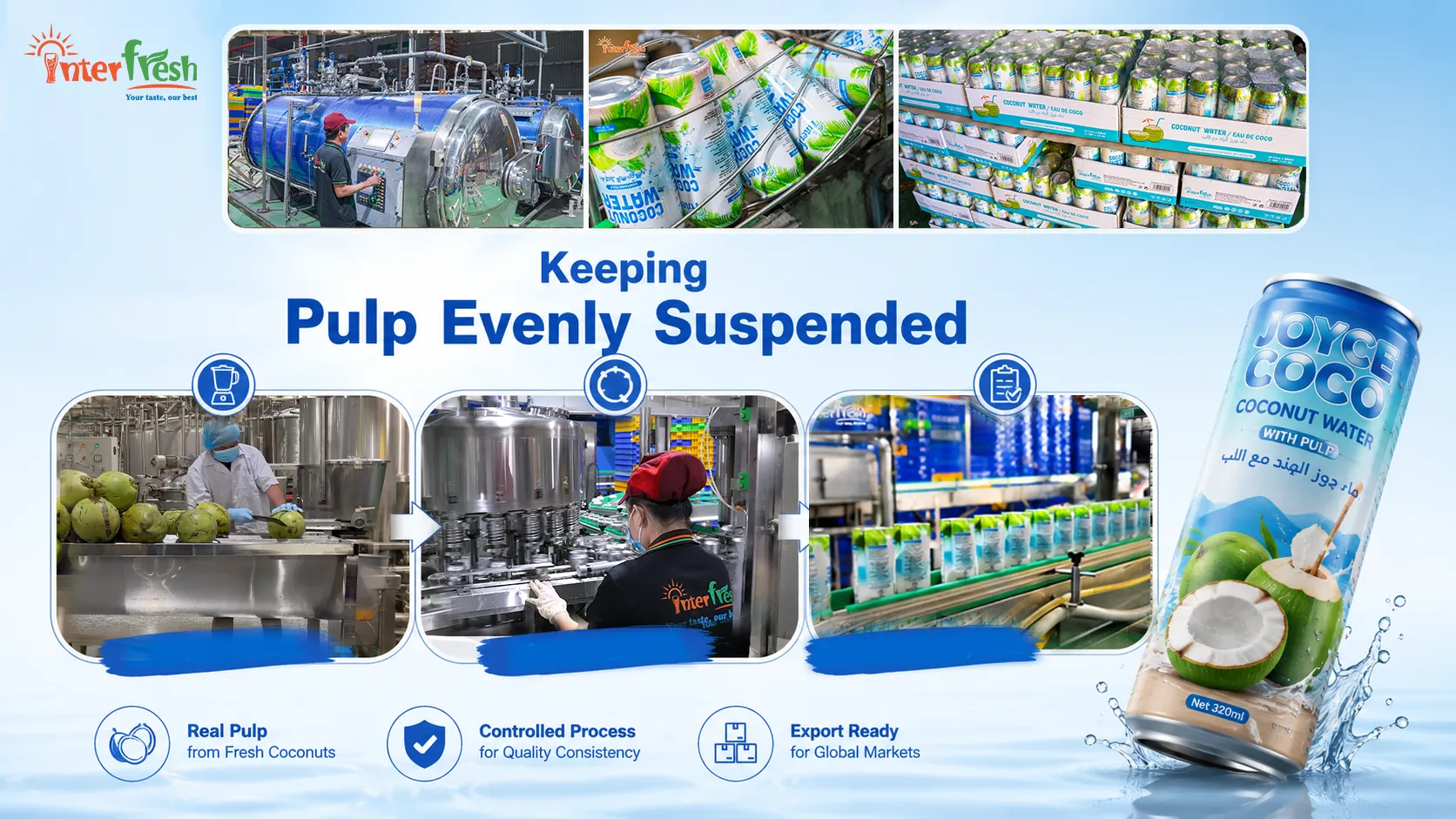
coconut with pulp4 11zon

Coconut pulp is heavier than coconut water and naturally tends to settle. Our filling line applies controlled agitation before sealing so pulp spreads evenly through each can. We test pulp distribution across full pallets, not only the first batch produced.

This check matters far more on long sea freight routes to Australia than on short domestic runs. Buyers who skip this step sometimes receive cans with pulp settled only at the bottom. We apply the same distribution control across our 320ml sleek can format and larger 500ml sizes.


Interfresh Coconut Water with Pulp Lineup for AU Market
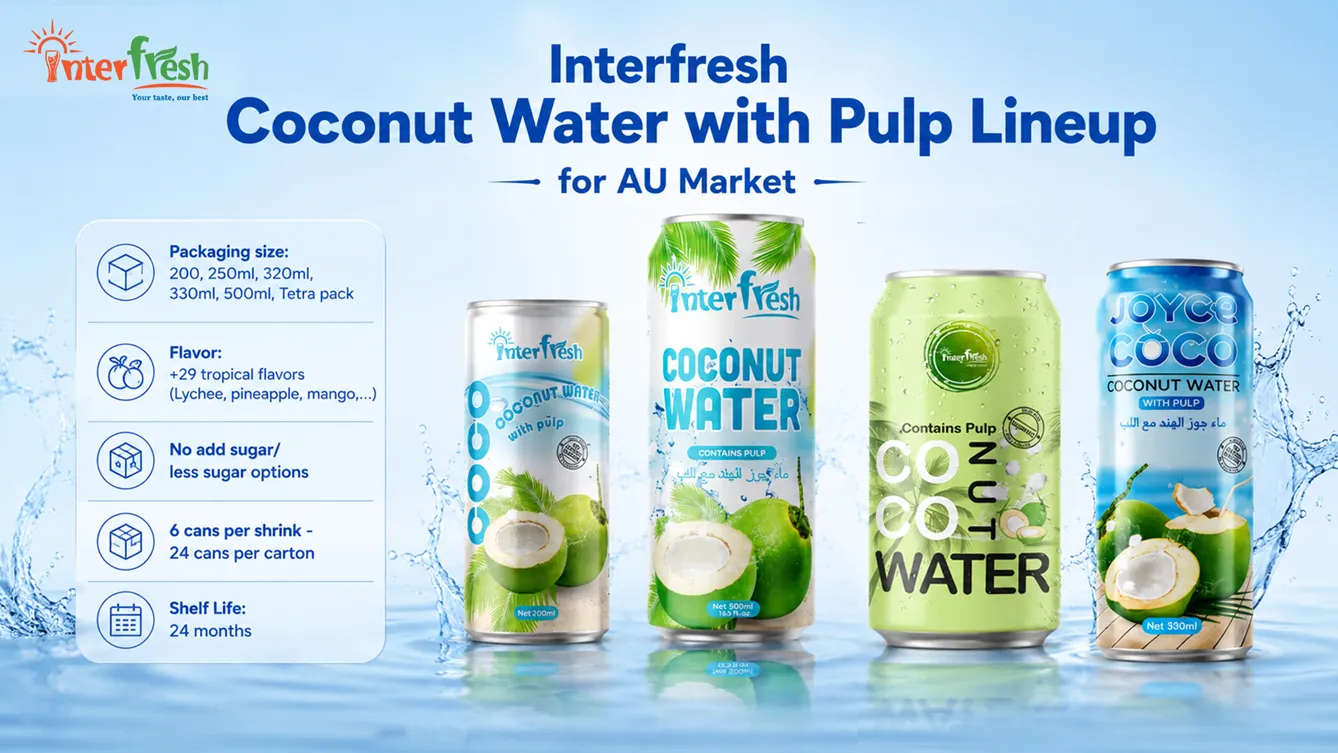
Interfresh Coconut Water with Pulp Lineup for AU Market
Interfresh ships three ready made SKUs built for the Australian market right now. Each one runs on the same aluminum can platform used across our OEM lines. Distributors can mix formats inside a single container to test retail response quickly.
No sugar added variants are gaining traction fastest with Australian retailers this year. This lines up with the clean label trend already covered above.
Every size in this lineup, and across the wider pulp range, follows the same packing standard for export planning.
Can SizeCase PackingCans per TrayShelf LifeMOQ per Flavor
200ml6 cans per shrink2424 months400 trays
250ml6 cans per shrink2424 months400 trays
330ml6 cans per shrink2424 months400 trays
500mlTray pack2424 months400 trays
One flavor lot at 400 trays lines up closely with a single 20 foot export container. This makes cost planning simple for a first private label order. If your brand needs a lighter carton format instead, our Tetra Pak coconut water line also supports a pulp version on request.

Full canning line specifications and fill options sit inside our canned coconut water OEM guide.


Certifications Australian Importers Ask For
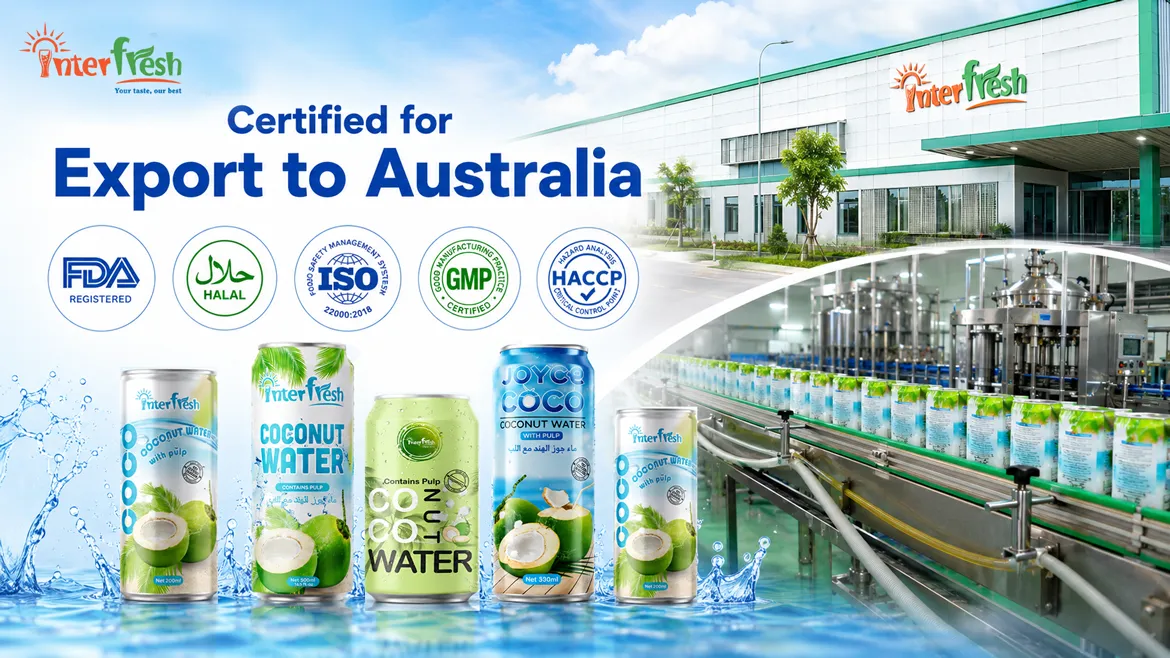
At Interfresh factory, every batch carries FDA, HALAL, ISO 22000:2018, GMP and HACCP certification
Every batch carries FDA, HALAL, ISO 22000:2018, GMP and HACCP certification. These match the food safety and biosecurity checks applied at Australian ports of entry. Full documentation ships with every order to support customs clearance.

Our coconut water manufacturing hub lists every certificate available for download before you commit. It is worth comparing this file against the general Australia supplier requirements page before you submit an RFQ.


How to Move From Sample to Purchase Order

Production runs 15 to 25 days after artwork and order confirmation are finalized. Standard payment terms are 50 percent deposit, with the balance due before shipment. We recommend a paid sample can first to confirm pulp texture and taste.
Once a sample is approved, your first purchase order follows the same specification without repeat testing. We supply the identical pulp specification to distributors across export markets, including our coconut water program for United States importers. That means your Australian order runs on an already proven production line.

Ready to move forward? Request a free sample or download our OEM catalogue to compare specifications directly with your current supplier.


FAQs

What is the difference between coconut water with pulp and coconut water without pulp? Coconut water with pulp contains three to five percent real coconut meat suspended in the liquid. Plain coconut water pours completely clear with no visible texture.
Is the pulp in canned coconut water natural or added later? Genuine pulp comes from the same young coconut used to extract the water. It is not a separate additive mixed in after processing.
What is the shelf life of coconut water with pulp? The aluminum can format holds a shelf life of 24 months from production. This comfortably covers sea freight time from Vietnam to Australia.
What is the minimum order quantity for private label coconut water with pulp? The standard MOQ is 400 trays per flavor, packed 24 cans per tray. This lines up with one flavor lot inside a single 20 foot container.

Which certifications are required to import coconut water with pulp into Australia? FDA, HALAL, ISO 22000:2018, GMP and HACCP certification are issued with every shipment. These support customs clearance and biosecurity checks at Australian ports.


References

  1. IMARC Group. Australia Coconut Water Market: Industry Trends, Share, Size, Growth and Forecast 2026 to 2034. Available at: https://www.imarcgroup.com/australia-coconut-water-market
  2. Grand View Research. Coconut Water Market Size and Share Report, 2026 to 2033. Available at: https://www.grandviewresearch.com/industry-analysis/coconut-water-market
  3. Fortune Business Insights. Coconut Water Market Report, 2026 to 2034. Available at: https://www.fortunebusinessinsights.com/coconut-water-market-112299
  4. Persistence Market Research. Coconut Water Concentrate Market Trend Analysis, 2026 to 2033. Available at: https://www.persistencemarketresearch.com/market-research/coconut-water-concentrate-market.asp