
Building a halal beverage brand for the GCC market is a different task than buying finished stock. A brand owner needs a manufacturing partner who understands custom formulation, not just a supplier with a certificate. Interfresh is a leading beverage manufacturer in Vietnam, built for exactly this work.
This guide goes past the basics of halal certification. It covers the ingredient risks nobody explains, the factory realities that decide whether a batch clears port, and the mistakes that cost GCC brands their launch window. If you are still comparing certified suppliers for ready-made stock, our separate guide on halal certified beverage sourcing for the Middle East covers that buying process in full. For the broader OEM and private label model across all Interfresh categories, see our OEM and private label manufacturing hub.
The Hidden Halal Risk in Custom Formulation
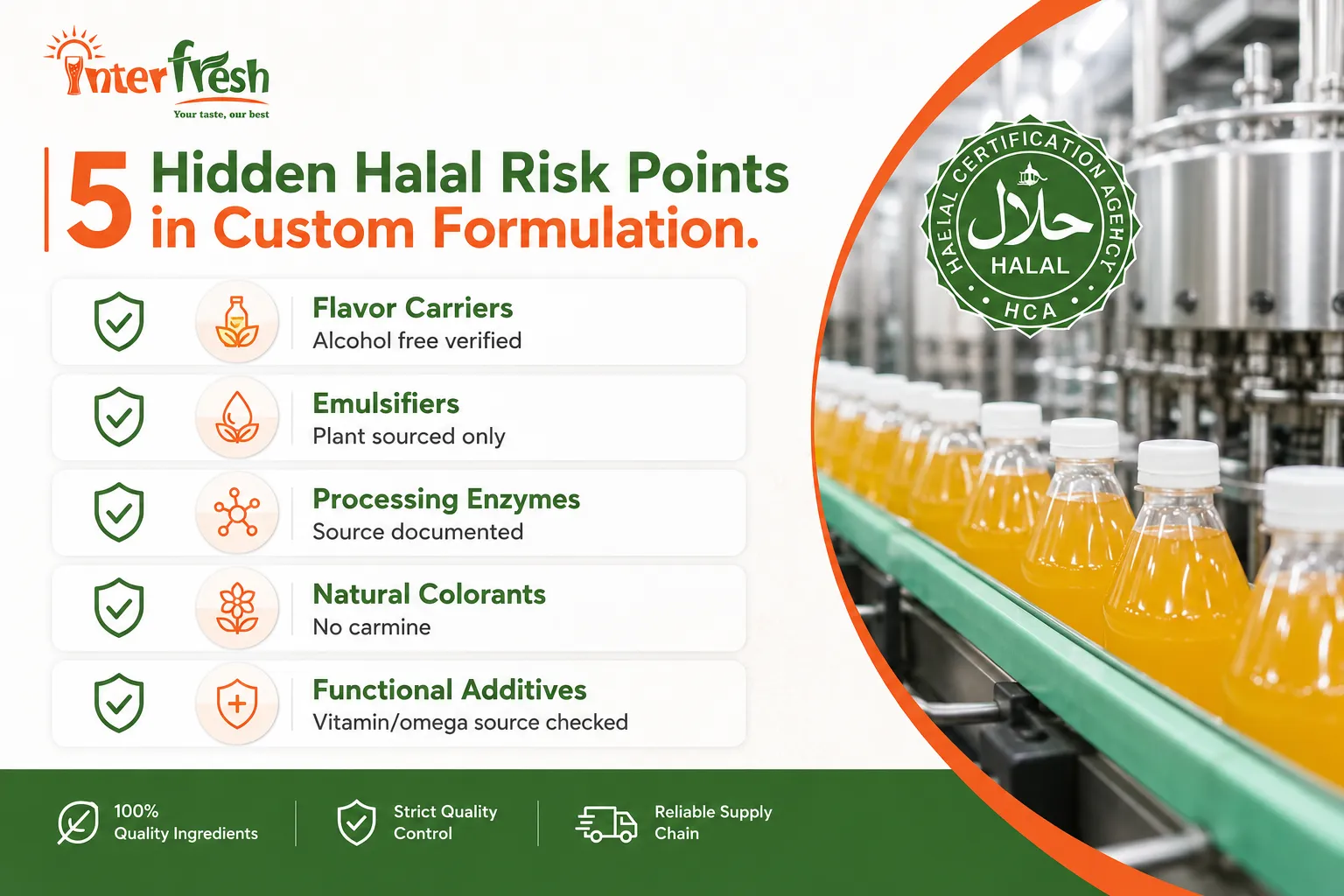
Most guides stop at two rules. No alcohol. No gelatin. For a brand ordering finished stock, that is enough. For a brand building a new formula from scratch, it is only the surface.
Flavor carriers. Many natural flavor compounds are dissolved in a solvent before blending. Ethanol is a common solvent choice in flavor houses outside Vietnam. Interfresh sources flavor carriers verified alcohol free at the raw material stage, before any formula work begins.
Emulsifiers. Mono and diglycerides appear in fruit juice drinks, dairy style beverages, and some functional formats. The fatty acid source can be plant based or animal based. Every emulsifier in an Interfresh halal formula is confirmed plant sourced before it reaches the mixing tank.
Processing enzymes. Pectinase and other clarifying enzymes sometimes carry animal derived processing aids. This step is invisible on a finished label, yet it can fail a halal audit. Interfresh verifies enzyme source documentation for every new formula.
Natural colorants. Carmine, derived from crushed cochineal insects, is a genuine grey area across different halal authorities. Interfresh avoids carmine entirely in GCC bound formulas and uses plant based color alternatives instead.
Functional additives. Vitamin D3 and omega blends can be sourced from lanolin or fish oil, a common concern in fortified formats such as energy drinks. Both require source verification before a functional beverage formula can carry a halal claim with confidence.
A brand owner does not need to memorize this list. A manufacturing partner should already be checking it before the first sample batch is made. Our ISO 22000, HACCP, and BRC certification comparison explains how these food safety systems interact with halal ingredient verification.
Dedicated Halal Production Line: Why Segregation Matters More Than the Certificate
A halal certificate proves a formula passed review. It does not prove the factory floor kept that formula halal through every stage of production.
Cross contact is the risk certification alone cannot catch. If a factory runs an alcohol based extract line on the same equipment as a halal juice line, residue can transfer between batches even with a valid certificate on file. GCC customs and retail buyers increasingly ask about production segregation, not only the paper certificate.
Interfresh assigns dedicated tanks, filling lines, and storage zones for halal production runs, the same discipline described in our beverage OEM production process guide. Raw materials for halal orders are stored separately from any non compliant input from the moment they arrive at the factory. This is the kind of production detail a brand owner should confirm before signing a purchase order, and one that Interfresh documents on request.
5 Mistakes GCC Brand Owners Make When Briefing an OEM Factory
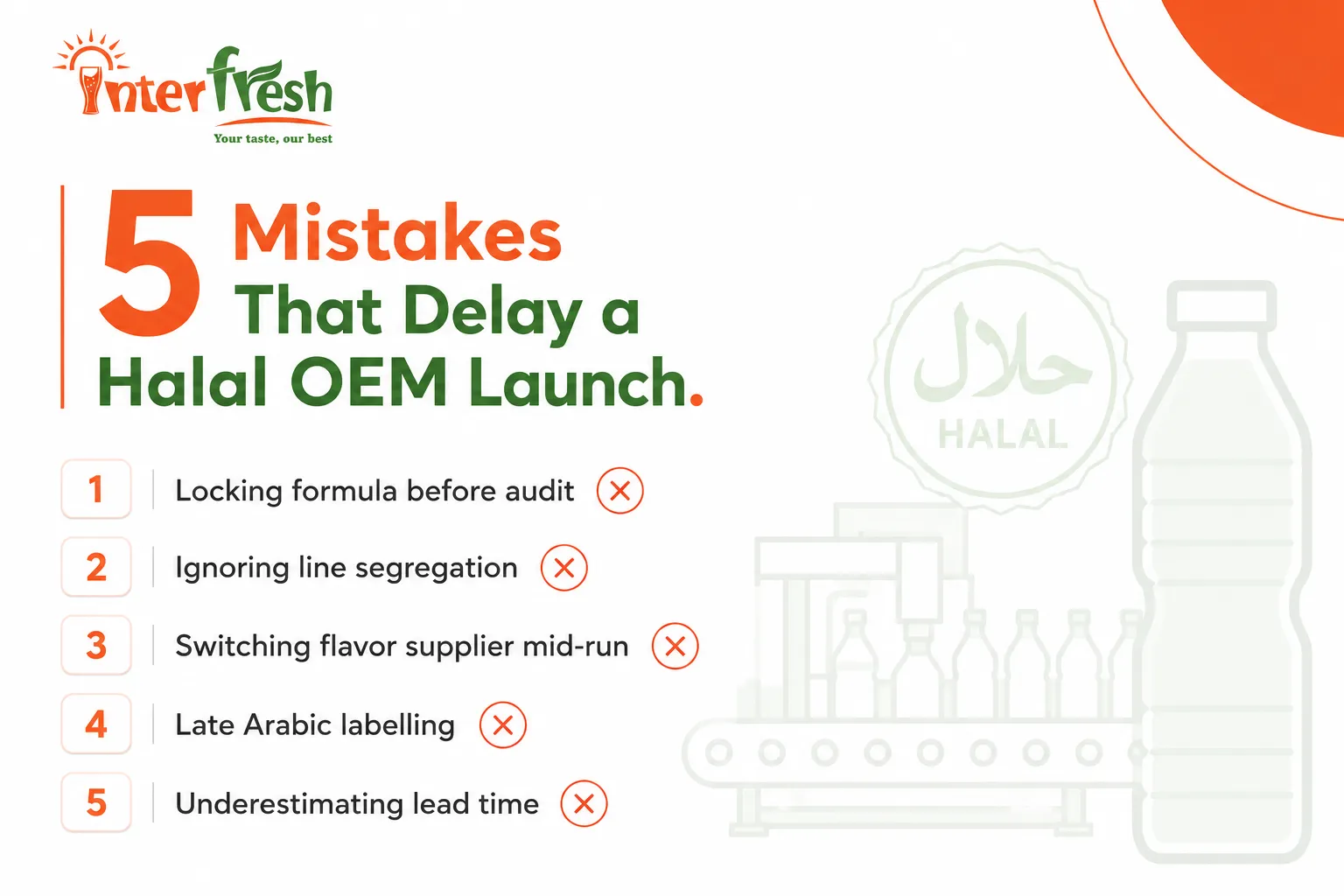
These five mistakes appear repeatedly among first time halal beverage brands. Each one delays a launch or forces a costly rework.
1. Locking the formula before halal audit results. Printing packaging or signing a distribution agreement before the halal certifying body confirms every ingredient is a common and expensive error. Brands unsure whether to supply their own formula or use ours should first read our OEM versus ODM comparison before locking anything.
2. Not asking whether the factory runs parallel non halal lines. A factory can hold a valid halal certificate while still running other product lines nearby. Ask specifically about segregation, not only about certification.
3. Switching flavor suppliers mid production. A formula change after halal approval can restart the certification review. Lock the flavor supplier and the carrier source before final approval, not after.
4. Treating Arabic labelling as a late stage task. Arabic label content, including ingredient declarations and manufacturer details, needs legal review early. Leaving it until shipping week creates avoidable delays at port.
5. Underestimating lead time for a first custom SKU. A brand new halal formula takes longer than a reorder, and volume expectations should be set against our MOQ guide for beverage OEM in Vietnam early. Brief the factory with realistic timing in mind, covered in the section below.
Interfresh’s export team walks every new GCC brand through this checklist before production begins, precisely because these five mistakes are preventable with the right briefing process.
How Interfresh Plans Your Production Around Ramadan, Eid, Hajj, and Summer
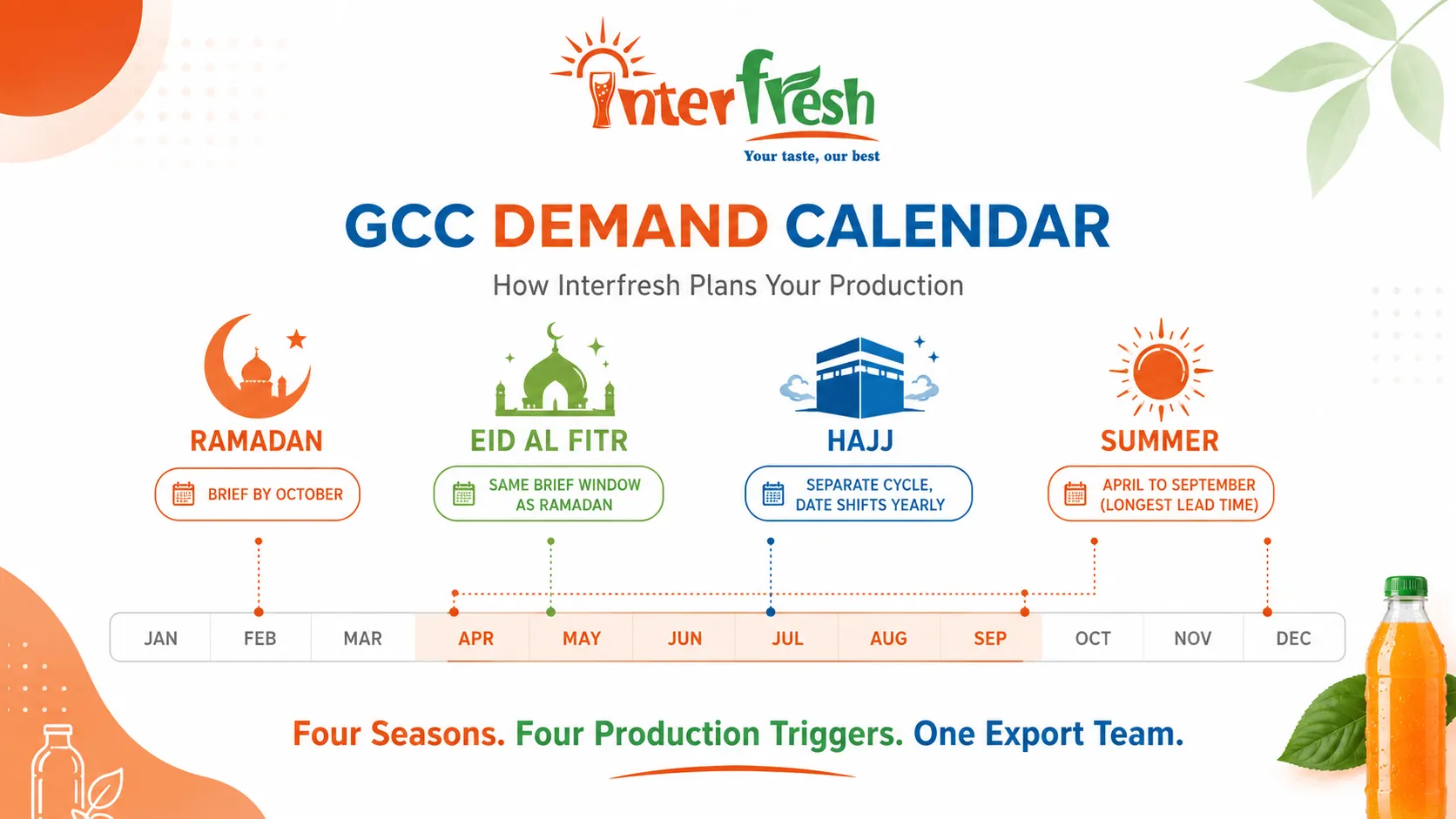
GCC beverage demand does not move on one calendar. It moves on four, and each one needs a different production trigger from Interfresh.
Ramadan. Retail sales across the MENA region reached USD 66 billion during the holy month, and consumer beverage buying intent builds well before promotions start. Ramadan 2027 will fall in early February. Interfresh recommends confirming formula and label artwork by October, so production and shipping land before the pre Ramadan stocking window opens
Eid al Fitr. Eid spending historically represents 35 to 40% of total combined Ramadan season spending in Saudi Arabia, concentrated in the final ten days before the holiday. Gifting formats and premium packaging see the sharpest demand spike. Brands planning an Eid specific SKU should brief Interfresh at the same time as the Ramadan order, since both windows share one production runway.
Hajj. Millions of pilgrims travel to Mecca and Medina each year, driving sustained demand for shelf stability, easy to distribute beverages across Saudi Arabia’s western region. Interfresh schedules Hajj season production separately from Ramadan, since the pilgrimage calendar shifts each year under the lunar cycle.
Summer. Temperatures across Saudi Arabia, the UAE, and Kuwait pass 45 degrees Celsius from April through September, and cold beverage demand rises 35 to 50% above baseline. Hydration categories such as coconut water and aloe vera drinks see the strongest custom formula requests during this peak, and it carries the longest runway need for a first time SKU.
Talk to Interfresh’s export team about which of these four windows fits your brand launch, and we will map a production and shipping schedule against the specific calendar date, not a generic quarter.
FAQs
Can I use my own flavor house for a halal beverage formula, or does Interfresh require its own suppliers? A brand can propose its own flavor house. Interfresh verifies the flavor carrier and any processing aids for halal compliance before formulation begins. If the supplier cannot confirm sourcing, Interfresh recommends a verified alternative.
What happens if my flavor supplier changes mid production? A supplier change after halal approval can trigger a new review with the certifying body. Interfresh recommends locking suppliers before final sign off to avoid delays.
Does Ramadan timing affect my OEM lead time? Yes. Because Ramadan and Eid share one production window, Interfresh recommends briefing both SKUs together and confirming formulas at least four months ahead of the holy month’s start date.
How does Interfresh prevent cross contact with non halal products during production? Interfresh runs dedicated tanks, filling lines, and storage zones for halal orders, with raw materials kept separate from any non compliant input from intake through final packing.
Are natural colorants like carmine used in Interfresh halal formulas? No. Interfresh avoids carmine and other cochineal derived colorants in all GCC bound formulas and uses plant-based color alternatives instead.
Can Interfresh support a Hajj season product launch separately from Ramadan? Yes. Because the Hajj calendar shifts each year, Interfresh schedules Hajj focus on production as a distinct planning cycle from Ramadan and Eid.
Start Your Halal OEM Project
Interfresh is a leading beverage manufacturer for GCC and Middle East brands that need a real production partner, not a catalogue. Every custom formula runs through ingredient level halal verification and a dedicated, segregated production line.
Ramadan, Eid, Hajj, and summer each need a different brief date. Talk to our export team now so your formula, label, and certification are ready before the window you are targeting opens.
References
-
Halal Conformity Center (2026). Halal Beverage Certification: Ingredient Control Points. Flavor carriers, glycerin, protein sources, and vitamin sourcing each carry distinct halal control points requiring verification. https://halalcc.org/halal-beverage-certification/
-
American Halal Foundation (2023). Halal Certification for Beverages. Beverages must contain no haram ingredients, raw materials, or additives, including alcohol or non halal animal derived inputs, at any production stage. https://halalfoundation.org/insights/halal-certification-for-beverages/
-
The Middle East Insider (2026). Saudi Arabia Ramadan Economy 2026. Ramadan 2026 consumer spending in Saudi Arabia reached an estimated 65 billion riyals, with Eid spending representing 35 to 40% of the combined Ramadan season total. https://themiddleeastinsider.com/2026/03/14/saudi-ramadan-economy-2026-spending-retail-trends/
-
Communicate Online (2025). Crescent Campaigns: How Ramadan Shapes Consumer Behaviours in the GCC. Regional Ramadan retail sales reached USD 66 billion, comparable in scale to the region’s largest annual shopping events. https://communicateonline.me/events-people/crescent-campaigns-how-ramadan-shapes-consumer-behaviours-in-the-gcc/
-
The Middle East Insider (2026). Ramadan and Gulf Economies. Ramadan 2026 fell between approximately February 18 and March 20, with Saudi Arabia recording elevated Umrah pilgrim volumes and hotel occupancy above 95% in Mecca during the month. https://themiddleeastinsider.com/2026/03/16/ramadan-gulf-economies/
-
GCC Standardization Organization (2024). GSO 2055: General Requirements for Halal Food. Sets the shared halal compliance standard referenced by Saudi SFDA, UAE ESMA, and other GCC national authorities for ingredient and process verification.