
From classic cola to sparkling fruit drinks, fizzy drinks come in more varieties than ever. As beverage brands explore new flavors and lower sugar options, understanding what goes into these drinks is becoming increasingly important.
Despite their differences in taste, ingredients, and appearance, fizzy drinks share one defining feature: dissolved carbon dioxide that creates their signature bubbles. But carbonation is only part of the story. The ingredients, production process, and formulation all help shape the final drink.
So, what exactly are fizzy drinks made of, how are they produced, and what should beverage businesses know when developing new products?
What Are Fizzy Drinks?
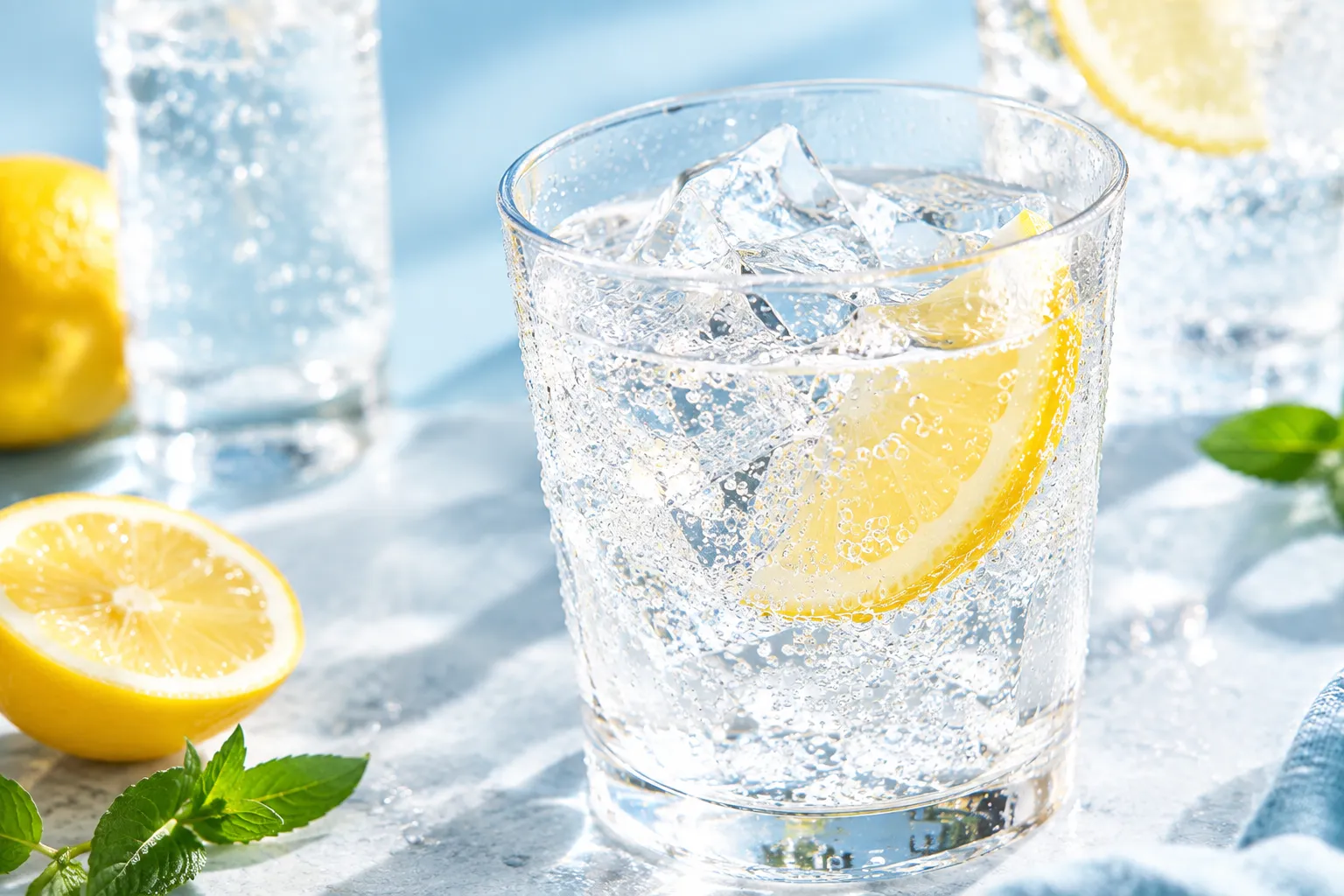
Fizzy drinks, also known as carbonated drinks, are non alcoholic beverages that contain dissolved carbon dioxide (CO₂). This gas creates bubbles and gives the drinks their characteristic fizz when poured or opened.
Depending on the formulation, fizzy drinks may contain sugar, alternative sweeteners, flavorings, fruit juice, caffeine, and other ingredients.
Some have a pronounced sweetness and distinctive flavor. Others contain little or no sweetness, such as plain sparkling water.
Different Names for Fizzy Drinks
The terminology varies across markets. Consumers may use different names for similar products, depending on local habits and regional preferences.
Common terms include:
-
Soda: Commonly used in the United States, particularly for flavored carbonated soft drinks.
-
Pop: A regional term for soda, especially in parts of the Midwestern United States.
-
Soft drinks: A broad term used internationally for non alcoholic beverages, including both carbonated and non carbonated products.
-
Fizzy drinks: Commonly used in the United Kingdom, Australia, and New Zealand.
-
Tonic water and mineral water: Names for specific beverage categories, not interchangeable terms for all fizzy drinks.
For beverage businesses, understanding these regional differences can help with product positioning, market research, and labeling decisions.
What Are Fizzy Drinks Made Of?
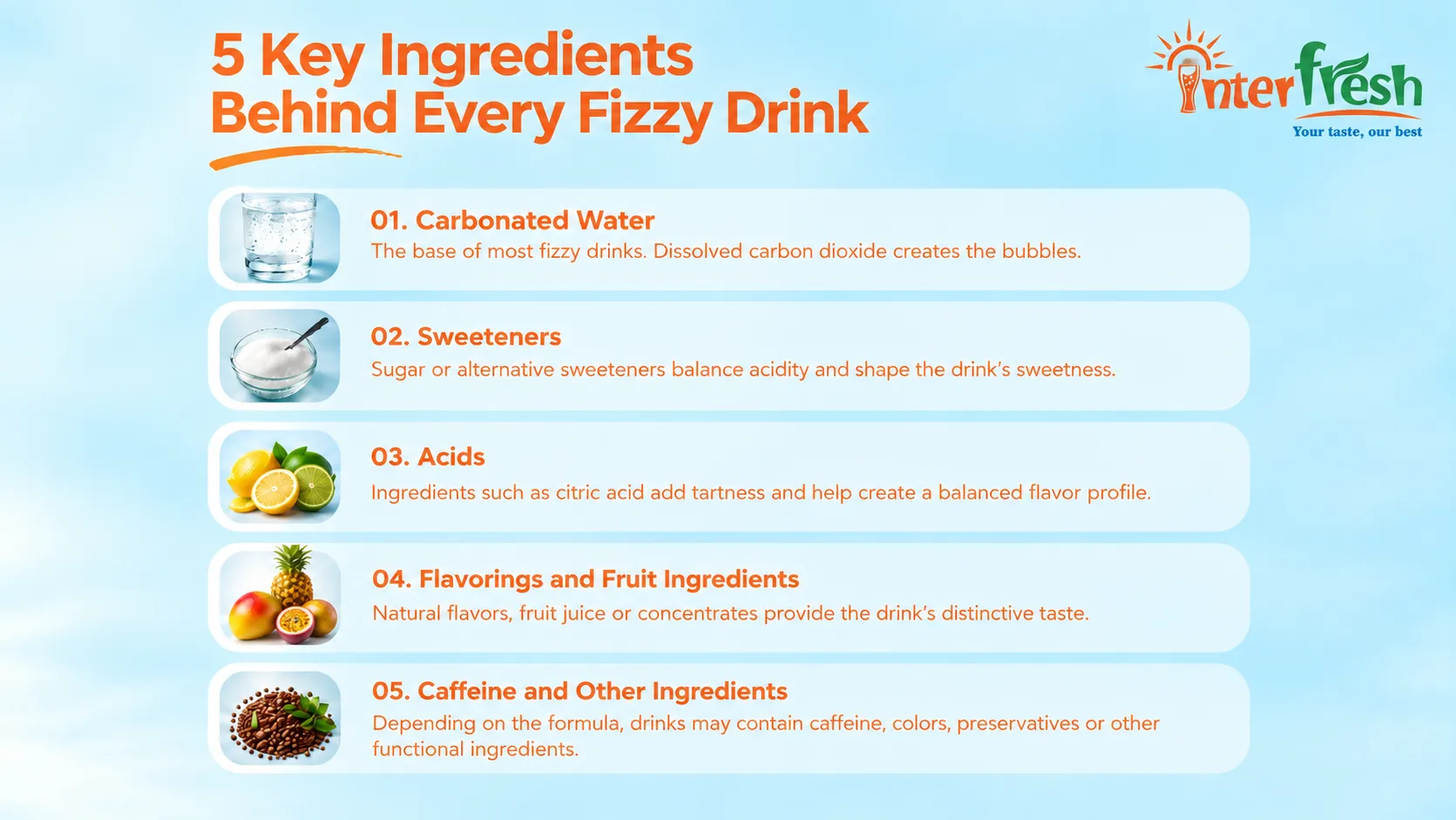
Not all fizzy drinks share the same formulation. A fruit soda typically contains more ingredients than a bottle of plain sparkling water.
However, many carbonated soft drinks are made from several key ingredient groups. The exact combination depends on the product concept, flavor profile, nutritional targets, and applicable regulations.
Carbonated Water
Carbonated water is water containing dissolved carbon dioxide (CO₂). It provides the foundation for the bubbles that characterize fizzy drinks.
In many products, carbonated water serves as the base for other ingredients, including sweeteners, fruit flavors, and food acids.
For plain sparkling water, water and carbon dioxide may be the primary ingredients. Flavored sparkling water can include additional flavorings to create a more distinctive taste.
For manufacturers, water quality is also an important part of beverage formulation. Consistent water characteristics help maintain product quality from one production batch to the next.
Sweeteners
Sweeteners provide sweetness and help balance the overall flavor of a beverage.
Common options include:
-
Sugar: Sucrose or other sugars selected according to the formulation.
-
Alternative sweeteners: Ingredients used to replace or complement sugar, depending on the desired sweetness and product positioning.
-
No added sweeteners: Some beverages are formulated without added sweetening ingredients.
Sugar content varies significantly between products. Fruit soda may contain sugar to deliver a more pronounced sweetness, while plain sparkling water typically requires none.
For brands developing new fizzy drinks, sweetener selection should reflect the target audience, local preferences, nutritional positioning, and applicable labeling requirements.
Acids
Food acids help create tartness and balance sweetness in many carbonated beverages.
Citric acid is commonly used in fruit flavored formulations. Other food acids may be selected depending on the recipe, desired flavor profile, and product quality requirements.
Acidity also influences the characteristics of the finished beverage. Manufacturers therefore need to select and control acid levels according to the established formulation.
For carbonated fruit drinks, the right balance between sweetness and acidity can help the fruit flavor taste more refreshing and well rounded.
Flavorings and Fruit Ingredients
Flavorings give each fizzy drink its distinctive identity, from classic cola and lemon soda to tropical profiles such as mango, pineapple, and passion fruit.
Depending on the product, the formulation may include:
-
Natural flavors or other suitable flavoring ingredients.
-
Fruit juice or fruit juice concentrates.
-
Permitted food colors.
-
Additional ingredients selected to meet the product’s intended characteristics.
One important distinction is that fruit flavored drinks do not necessarily contain a high percentage of fruit juice. Their flavor may come from different combinations of ingredients, depending on the formulation.
For businesses developing carbonated fruit drinks, it is important to define the desired flavor, fruit content, and product positioning early in the development process.
A clear product brief helps align ingredient selection with the intended taste, price point, and target market.
Caffeine and Other Ingredients
Some fizzy drinks contain caffeine, particularly many energy drinks and certain cola formulations.
However, caffeine is not an essential ingredient in every carbonated beverage.
Similarly, preservatives and other functional ingredients may be used when appropriate for the formulation, manufacturing process, and regulations in the target market.
Ingredient selection should always reflect the product’s technical requirements and intended positioning. Manufacturers must also ensure that the finished product complies with applicable food safety and labeling regulations.
How Do Fizzy Drinks Get Their Fizz?
The answer lies in carbon dioxide (CO₂). When carbon dioxide dissolves in a liquid, the beverage can retain a certain amount of gas.
When the container is opened or the drink is poured, the pressure changes. Dissolved CO₂ then escapes from the liquid, forming the bubbles we recognize as fizz.
The process can be understood in three simple steps.
Step 1. CO₂ dissolves in the liquid
During carbonation, carbon dioxide is introduced into the beverage under controlled pressure. Lower temperatures generally help more CO₂ dissolve in the liquid.
Step 2. The packaging keeps the gas inside
The beverage is sealed in a suitable can or bottle. The sealed packaging helps maintain the conditions needed to retain dissolved CO₂.
Step 3. Bubbles form when the container is opened or the drink is poured
Opening the package reduces the pressure inside. CO₂ gradually escapes from the liquid and forms visible bubbles.
This also explains why fizzy drinks gradually lose their carbonation after opening, especially when left exposed to the air for an extended period.
What affects the level of fizz?
Several factors influence carbonation and the drinking experience:
-
CO₂ level: The amount of dissolved carbon dioxide affects how intensely a beverage fizzes.
-
Temperature: Colder liquids generally retain more dissolved CO₂ than warmer liquids under comparable conditions.
-
Pressure: Pressure helps CO₂ remain dissolved during carbonation and sealed storage.
-
Packaging seal: A compromised seal can allow gas to escape over time.
-
Opening and pouring: Pressure changes and handling influence how quickly bubbles are released.
The appropriate carbonation level depends on the beverage category and the experience the manufacturer wants to create. A lightly sparkling drink does not necessarily require the same CO₂ level as a strongly carbonated soda.
How Are Fizzy Drinks Made?
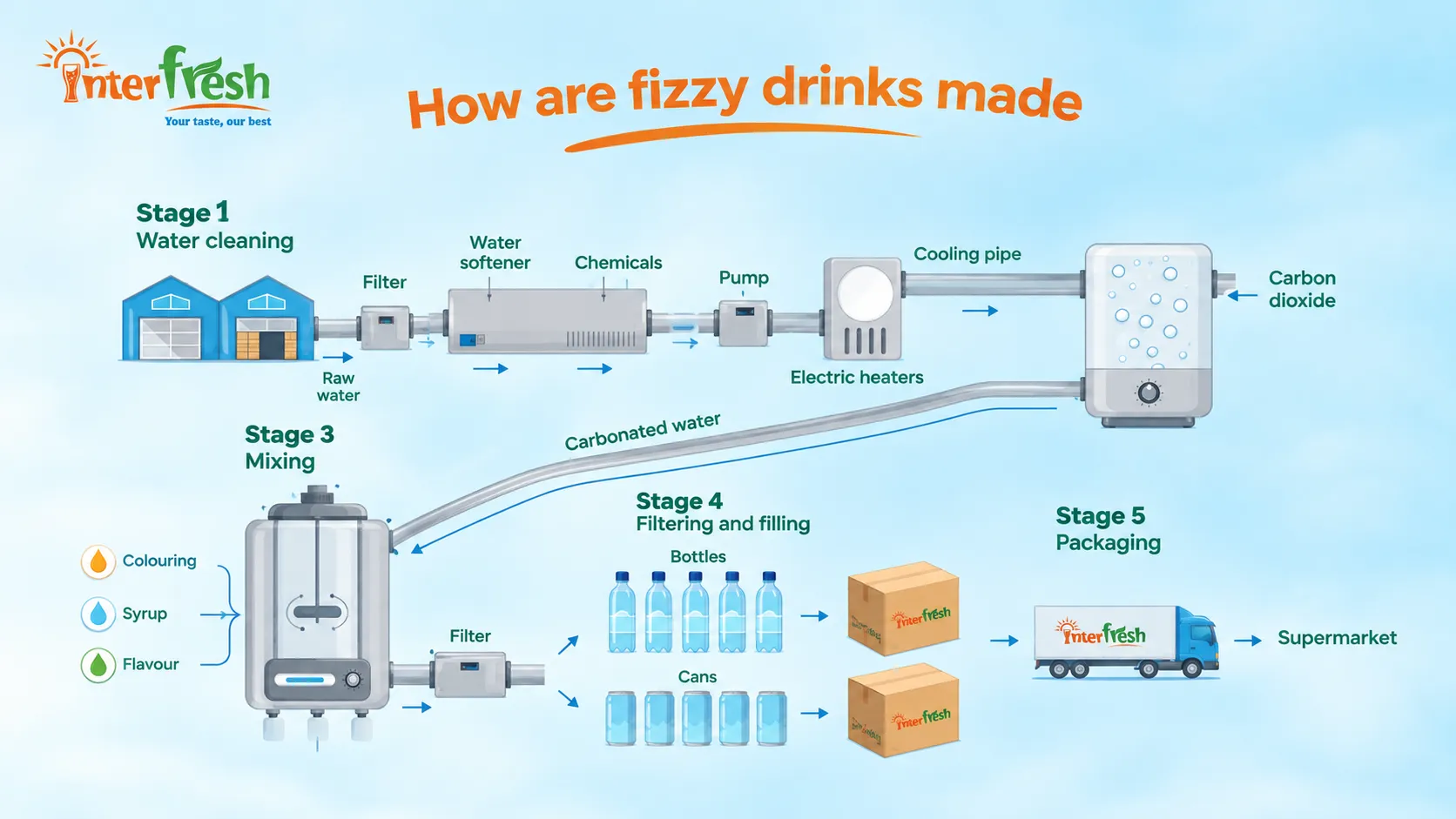
The manufacturing process for fizzy drinks varies according to the formulation, equipment, and food safety requirements. However, a typical carbonated soft drink production process involves six main stages.
Step 1. Water Treatment and Filtration
Goal: Prepare suitable water for beverage production.
Water is treated to remove unwanted particles and impurities that could affect the finished product. The specific treatment method depends on the water source and the manufacturer’s quality standards.
Depending on the requirements, the process may include filtration, activated carbon treatment, or water softening.
Before moving to the mixing stage, water quality should be checked against the product’s specifications.
Quality checkpoint: Water quality and consistency between production batches.
Step 2. Syrup Preparation and Ingredient Mixing
Goal: Develop the beverage’s flavor base and sweetness.
For many sodas, sugar is dissolved in water to create a syrup. The syrup is then blended with treated water, acids, flavorings, and other ingredients according to the formulation.
Not every product requires syrup. Unsweetened sparkling water, for example, may follow a simpler preparation process.
At this stage, ingredient ratios and mixture uniformity need to be controlled. Even small variations in the recipe can change sweetness, acidity, or flavor intensity.
Quality checkpoint: Ingredient ratios, flavor consistency, and mixture uniformity.
Step 3. Carbonation
Goal: Create the beverage’s characteristic fizz.
In forced carbonation, CO₂ is introduced into the beverage under controlled pressure. The liquid is often chilled when appropriate to support gas dissolution.
Carbonation equipment allows manufacturers to manage operating parameters according to product requirements. The target carbonation level is selected based on the formulation and intended drinking experience.
Quality checkpoint: CO₂ level, temperature, and pressure.
Some beverages can produce carbon dioxide through fermentation. However, forced carbonation is widely used in the production of many commercial soft drinks.
Step 4. Heat Treatment, If Required
Goal: Meet food safety requirements and support product stability.
Not all fizzy drinks require the same heat treatment. The decision depends on the formulation, acidity, ingredients, packaging, and validated food safety process.
Some products may require pasteurization or another suitable treatment method. The order of processing can also vary according to the manufacturing system.
Heat treatment should be selected based on the product’s specific requirements rather than applied uniformly to every carbonated beverage.
Quality checkpoint: Validated processing parameters and applicable food safety requirements.
Step 5. Filling, Sealing, and Packaging
Goal: Transfer the beverage into its final packaging while minimizing CO₂ loss.
The beverage is filled into suitable cans or bottles designed for carbonated products. Filling equipment must operate under appropriate conditions to limit excessive foaming and reduce carbonation loss.
Isobaric filling, also known as counter pressure filling, is one technology used for carbonated beverages. It helps manage pressure differences during filling to reduce excessive foaming and retain carbonation.
After filling, the container is sealed to help prevent leakage, contamination, and carbonation loss during storage and transportation.
Packaging options may include aluminum cans and PET bottles, depending on the product concept and market requirements.
Quality checkpoint: Fill volume, closure integrity, leakage, and carbonation retention.
Step 6. Quality Control, Labeling, and Distribution
Goal: Ensure finished products meet the required specifications before dispatch.
Depending on the product, quality control may cover appearance, color, aroma, taste, carbonation, net volume, packaging condition, and relevant food safety parameters.
Products that meet the requirements are labeled, marked with batch codes, packed into cartons, and prepared for storage or transportation.
For export products, labeling, traceability records, and storage conditions must meet the requirements of the destination market.
Quality checkpoint: Product conformity, traceability, packaging condition, and shipment readiness.
Overall, the quality of fizzy drinks depends on more than CO₂. Water quality, ingredient formulation, carbonation, filling technology, and quality control all contribute to a consistent finished product.
What Are the Different Types of Fizzy Drinks?
Fizzy drinks come in many forms. They can be classified according to their ingredients, flavor profiles, intended use, and market positioning.
Common categories include:
| Beverage type | Key characteristics | Common examples |
| Carbonated soft drinks (CSDs) | Carbonated beverages that may contain sweeteners, acids, and flavorings | Cola, lemon soda, orange soda |
| Carbonated fruit drinks | Beverages featuring fruit flavors, with fruit juice content varying by formulation | Mango soda, pineapple soda, mixed fruit drinks |
| Sparkling water | Water containing dissolved CO₂, sometimes with added flavors | Plain sparkling water, flavored sparkling water |
| Tonic water | A carbonated beverage with a characteristic bitter taste from quinine | Classic tonic water, flavored tonic water |
| Energy drinks | Beverages formulated to deliver energy related ingredients, often including caffeine | Carbonated energy drinks |
| Specialty fizzy drinks | Products featuring distinctive flavors, ingredients, or positioning | Botanical sparkling drinks, innovative fruit soda combinations |
These categories can differ considerably in formulation. For example, a carbonated fruit drink may contain fruit juice, while another fruit flavored soda may rely primarily on flavorings.
When evaluating a product, businesses should therefore review its ingredients and label rather than relying on the product name alone.
Are Fizzy Drinks Different From Sparkling Water and Soda Water?
These terms are related, but they are not always interchangeable.
Fizzy drinks is a broad term for beverages with carbonation. Sparkling water generally refers to water containing dissolved CO₂, while soda water typically refers to carbonated water that may contain added minerals, depending on the product.
Tonic water is different because it has a distinctive bitter taste from quinine and is commonly used in beverage mixing.
Commercial terminology can vary between markets. To understand a specific product accurately, check its ingredients and product label.
For a more detailed comparison, read our guide to Tonic Water vs. Sparkling Water: Key Differences.
What Are Some Popular Fizzy Drink Flavors in 2026?
In 2026, fizzy drink flavors are balancing familiarity with fresh ideas. Classic citrus and tropical fruits remain appealing, while emerging flavors and unexpected combinations give beverage brands new ways to stand out.
Here are some flavor directions worth watching in 2026.
- Citrus with a modern twist
Orange, lemon, and lime remain familiar choices. Newer options such as yuzu, calamansi, and mandarin bring a more distinctive citrus profile, combining refreshing acidity with a more layered taste.
- Tropical fruit combinations
Mango, pineapple, and passion fruit offer versatile options for refreshing carbonated drinks. Dragon fruit, guava, and lychee can add a more adventurous touch, especially when paired with familiar citrus or berry notes.
- Cherry and nostalgic soda flavors
Cherry, black cherry, cola, and root beer draw on familiar soda experiences. New combinations can make these classic profiles feel fresh without losing their recognizable character.
- Sweet, sour, and spicy combinations
Flavors that combine sweetness with tangy or spicy notes are attracting interest. Think mango with lime, pineapple with a chili inspired note, or citrus with ginger. These combinations create a more expressive taste experience than straightforward sweetness alone.
- Dessert inspired soda flavors
Cream soda, vanilla, cookies and cream, and other dessert inspired profiles bring a playful, indulgent direction to fizzy drinks. They can appeal to consumers looking for a treat rather than a simple refreshment.
- Fruit flavors with a lighter botanical touch
Hibiscus, floral notes, and selected herbs can add complexity to citrus and fruit based sparkling drinks. These combinations offer brands another way to create a more refined flavor profile.
For beverage brands, the opportunity is not simply to launch an unusual flavor. It is to combine a recognizable base with one distinctive twist. Mango and lime, cherry and citrus, or dragon fruit and lemon are examples of concepts that balance familiarity with novelty.
The key takeaway for 2026 is that classic flavors still matter, but thoughtful combinations can help a fizzy drink feel new. The best direction depends on the target market, local taste preferences, product positioning, and formulation feasibility.
Are Fizzy Drinks Healthy?
Fizzy drinks cannot all be evaluated in the same way. Their nutritional profiles can differ significantly between unsweetened sparkling water, fruit soda, and energy drinks.
Three key factors are worth considering when comparing products.
Sugar Content
Some carbonated soft drinks contain significant amounts of added sugar. Others use alternative sweeteners or contain no added sugar.
Reading the nutrition label is a practical way to compare sugar content between products.
People looking to reduce their added sugar intake may consider plain sparkling water or other options that suit their dietary needs.
Acidity and Dental Health
Some fizzy drinks are acidic because of carbonation, food acids, or other ingredients in the formulation. Frequent exposure to acidic drinks can contribute to dental enamel erosion.
The potential impact depends on the product and consumption habits. Not all carbonated beverages have the same acidity or effects on dental health.
Caffeine and Other Ingredients
Some energy drinks and cola products contain caffeine, while many sparkling waters do not.
Consumers should check the ingredient label to determine whether a product contains caffeine, sweeteners, or other ingredients they may need to consider.
The key point is that fizzy drinks are a diverse beverage category. Ingredients, sugar content, acidity, and caffeine are more useful factors for evaluating individual products than carbonation alone.
What Should Businesses Consider When Developing Fizzy Drinks?
For beverage brands, importers, and distributors, developing a fizzy drink involves more than choosing a flavor. The formulation must align with the target market, packaging, cost structure, and destination market requirements.
Define the Product Concept
Start by identifying the type of beverage you want to develop.
It could be a carbonated fruit drink, sparkling water, soda, or a specialty beverage. Each category has different ingredient requirements, flavor profiles, and price positioning.
A clear product brief should define the target market, intended consumers, flavor direction, sweetness level, and desired drinking experience.
This gives the development team a practical foundation for making formulation and packaging decisions.
Choose the Right Flavor and Formulation
Flavor is important, but it needs to be considered alongside the entire beverage formulation.
Businesses should evaluate:
-
Sweetness and acidity.
-
Fruit flavor intensity.
-
Carbonation level.
-
The use of sugar, alternative sweeteners, or fruit ingredients.
-
Shelf life and storage requirements.
Product samples allow businesses to assess the taste and overall drinking experience before approving the final formulation.
For export markets, flavor preferences and ingredient requirements should also be considered early in the development process.
Match Packaging With the Product
Packaging affects brand presentation, the consumer experience, logistics, and cost.
Options may include aluminum cans, PET bottles, and other suitable packaging formats.
The right choice depends on the beverage’s characteristics, carbonation retention requirements, serving size, distribution channels, and destination market regulations.
For carbonated products, packaging performance is particularly important because the container must help retain CO₂ throughout storage and transportation.
Evaluate Shelf Life and Quality Requirements
Shelf life should be established based on the formulation, manufacturing process, packaging, and appropriate testing data.
Businesses should also define quality standards, storage conditions, and labeling requirements before commercializing the product.
Not all fizzy drinks have the same shelf life simply because they contain carbonation. Product stability depends on multiple factors, including the ingredients and processing method.
For international distribution, these requirements should be evaluated against the expected shipping, warehousing, and retail conditions.
FAQs About Fizzy Drinks
Do fizzy drinks contain caffeine?
Not all fizzy drinks contain caffeine. It is present in some cola products and energy drinks but is generally absent from plain sparkling water. Check the product label to confirm.
Can fizzy drinks be sugar free?
Yes. Some products contain no added sugar or use alternative sweeteners. However, sugar free does not mean that every other ingredient is the same across products.
Why do fizzy drinks lose their fizz after opening?
Opening a container reduces the pressure that helps keep CO₂ dissolved in the liquid. The gas gradually escapes, especially when the drink is left open for an extended period. Resealing the container and keeping the drink cold can help slow carbonation loss.
What are some examples of fizzy drinks?
Common examples include cola, lemon soda, orange soda, carbonated fruit drinks, sparkling water, tonic water, and many carbonated energy drinks.
Are sparkling water and soda the same?
Not necessarily. Sparkling water generally refers to water with dissolved CO₂, while soda can refer to flavored carbonated soft drinks. Soda water and tonic water also have their own characteristics. The exact formulation depends on the product.
Are fizzy drinks and soft drinks the same?
The terms overlap, but they do not mean exactly the same thing.
-
Fizzy drinks: Emphasizes carbonation and the characteristic bubbling sensation.
-
Soft drinks: Generally refers to non-alcoholic beverages, including both carbonated and non carbonated products.
References
-
University of Florida, IFAS Extension. A Guide to Carbonating Beverages at Small Scale. Explains carbonation methods, the effects of pressure and temperature, and common ways to measure dissolved carbon dioxide. https://ask.ifas.ufl.edu/publication/FS379
-
U.S. Food and Drug Administration (FDA). Carbonated Soft Drinks: What You Should Know. Provides information about ingredient safety, food contact materials, manufacturing practices, and nutrition labeling. https://www.fda.gov/food/buy-store-serve-safe-food/carbonated-soft-drinks-what-you-should-know
-
The Coca-Cola Company. What Brands Does The Coca-Cola Company Offer? An official overview of beverage brands, including Coca-Cola, Fanta, Sprite, and sparkling water brands. https://www.coca-cola.com/us/en/about-us/faq/what-brands-does-the-cocacola-offer
-
U.S. Food and Drug Administration (FDA). Bottled Water/Carbonated Soft Drinks Guidance Documents & Regulatory Information. A reference point for relevant U.S. regulatory documents and requirements. https://www.fda.gov/food/guidance-documents-regulatory-information-topic-food-and-dietary-supplements/bottled-watercarbonated-soft-drinks-guidance-documents-regulatory-information