Cost to Manufacture Beverages in Vietnam 2026: Full Pricing by Product Category
Mid year is when most importers lock next year’s numbers. Q3 and Q4 purchase orders depend on one figure above all others. The cost to manufacture beverages in Vietnam shapes every landed cost model that follows.
This guide breaks down that cost by product category, using 2026 labor, packaging and ingredient data. Every figure here is an industry average range, not a quote. For details on how OEM production actually works, see our OEM and private label beverage manufacturer guide for Vietnam.
A Note on These Numbers Before You Read Further
These figures are reference ranges only. They are built from public wage, packaging and commodity data, not from any single factory quote. Actual FOB pricing depends on formulation, packaging choice, MOQ and the specific supplier.
Use this guide to sanity check quotations, not to replace one. Always request a written quote for your exact specification before finalizing a Q3 or Q4 budget.
Quick Reference: FOB Cost Range by Beverage Category
The table below shows typical FOB per unit ranges, ex works Vietnam, in a 250 to 330ml format. These are planning ranges, not fixed prices.
Product category
Typical FOB range per unit
Main cost driver
Fruit juice and still fruit drinks
USD 0.12 to 0.22
Fruit pulp or concentrate cost
Sparkling and carbonated fruit drinks
USD 0.15 to 0.26
Carbonation line and can cost
Coconut water
USD 0.18 to 0.30
Raw coconut and processing yield
Ready to drink coffee
USD 0.20 to 0.35
Coffee bean grade and retort processing
Less sugar and prebiotic functional drinks
USD 0.20 to 0.34
Functional fiber and flavor system
Energy drinks
USD 0.22 to 0.38
Active ingredients and slim can format
Plant based and oat milk RTD
USD 0.25 to 0.42
UHT processing and aseptic packaging
Every category above scales down significantly at higher MOQ. A first order at minimum volume typically sits near the top of its range.
What Actually Drives the Cost to Manufacture Beverages in Vietnam
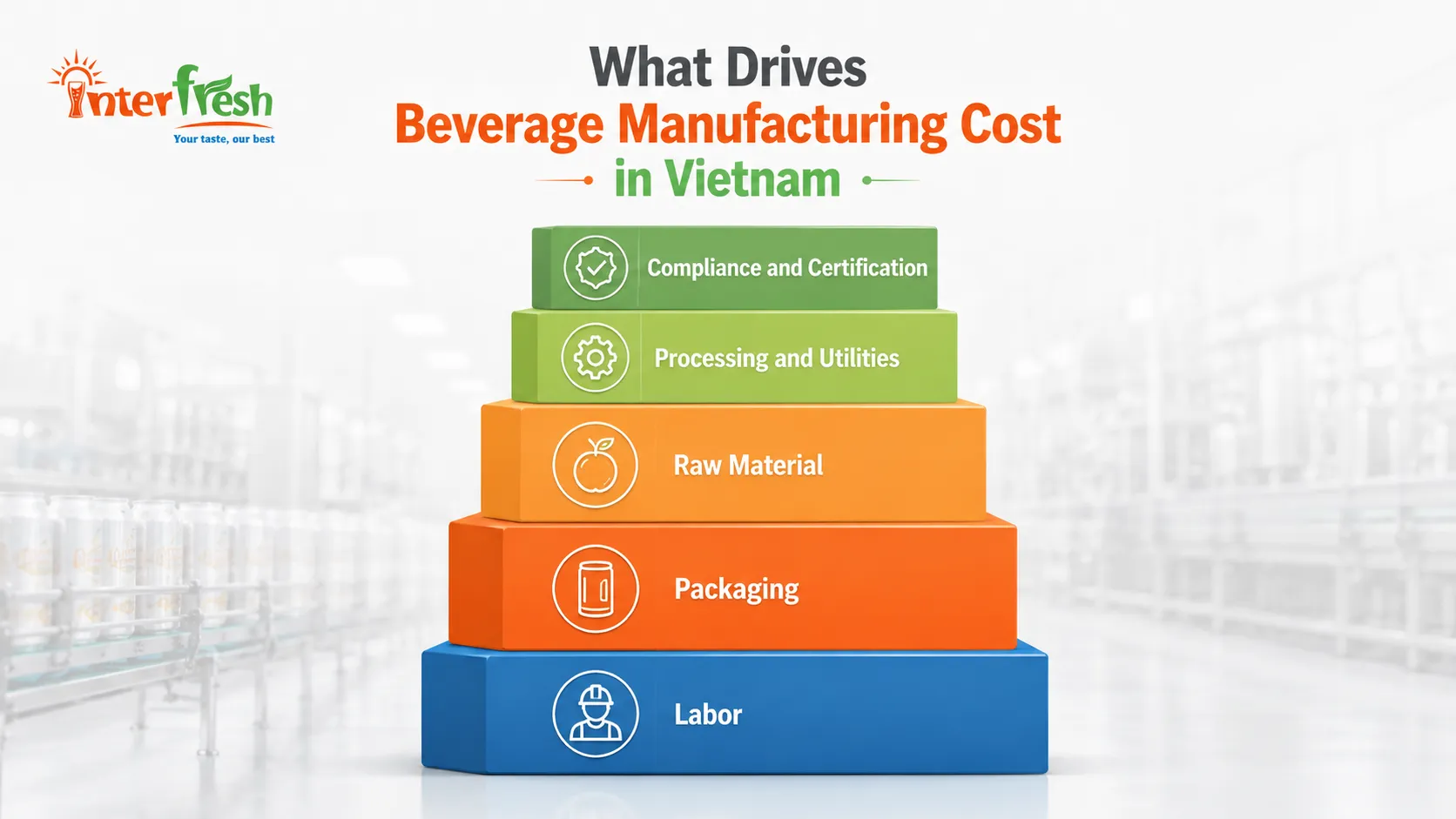
Vietnam beverage FOB cost range by product category 2026, juice to plant based RTD
Five cost layers stack on top of each other for every SKU. Understanding each one helps you read a quotation correctly, not just compare a final number.
Labor Cost
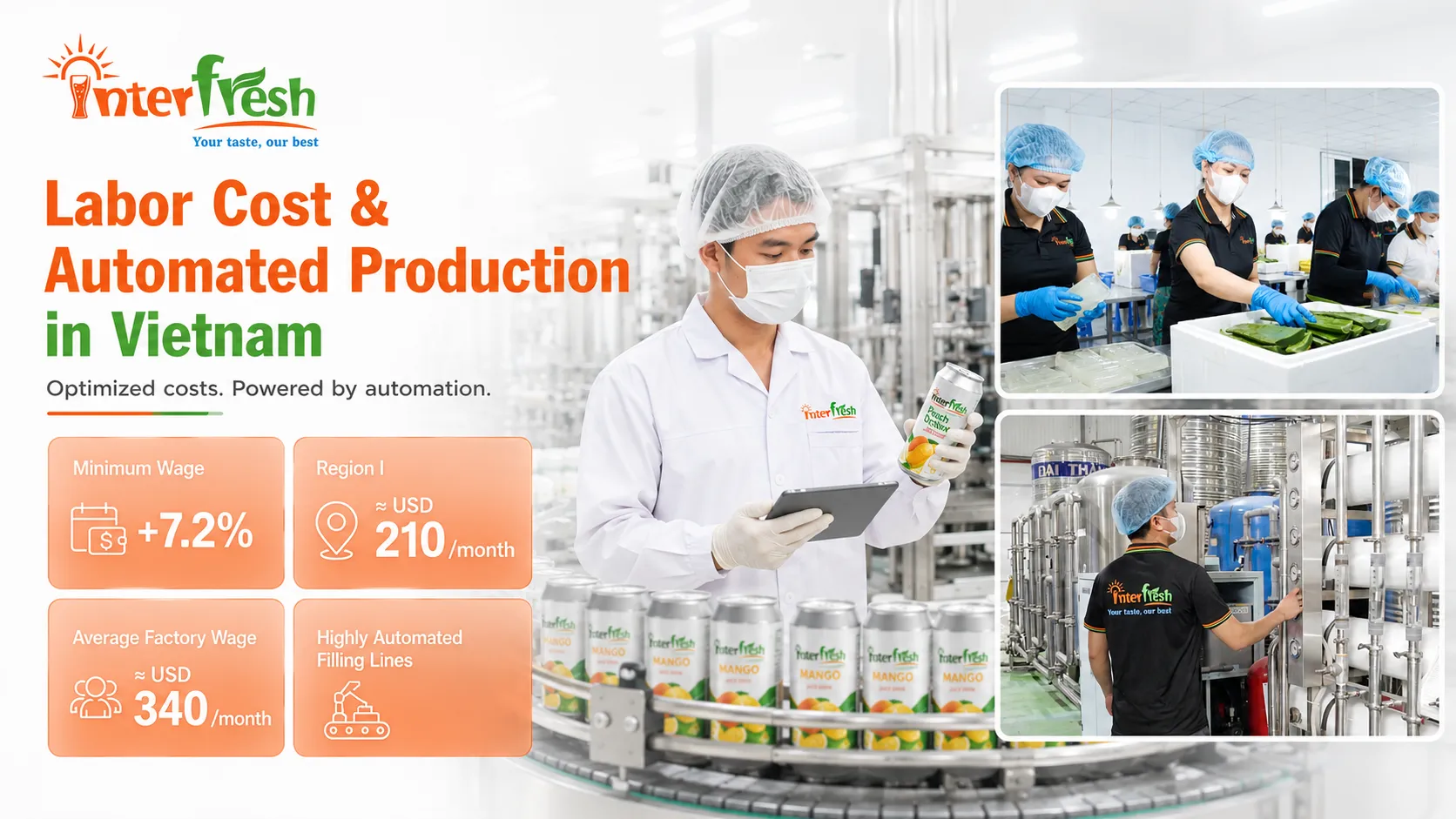
Vietnam raised its regional minimum wage by 7.2 percent under Decree 293, effective January 1, 2026 (Vietnam Government Portal, 2025). Region I, covering Hanoi and Ho Chi Minh City, now sits near USD 210 per month.
Actual factory wages run well above this floor. National average pay reached about VND 8.68 million per month in late 2025, close to USD 340 (Vietnam Briefing, Dezan Shira and Associates, 2026). Skilled line supervisors and QC staff earn a further premium on top of that base.
Labor typically makes up a modest share of total unit cost for canned beverages, since filling lines are highly automated. It matters more for products needing manual sorting, such as whole fruit juice with pulp.
Packaging Cost
Packaging format changes the cost structure more than almost any other variable. Across global markets, PET bottles run as low as USD 0.071 per liter. Aluminum cans sit in the middle. Glass runs highest, at up to USD 0.354 per liter (International Aluminium Institute, cost study).
Raw aluminum alone can account for 50 to 70 percent of total can manufacturing cost. The share depends on can size and thickness. This is why aluminum cost swings move beverage OEM quotations directly, often within the same quarter.
For buyers comparing certification heavy categories, we have a useful resource. Our ISO 22000 vs HACCP vs BRC guide explains where compliance testing adds to landed cost.
Raw Material Cost
Raw material cost varies more by category than any other line item. Fruit based drinks depend on seasonal pulp and concentrate pricing. Coconut water depends on raw nut yield, which shifts with harvest conditions.
Functional and prebiotic drinks carry a premium for fiber blends and stabilizers. Our guide on clean label beverage manufacturing covers how ingredient sourcing choices affect both cost and label claims.
Processing and Utilities
Different beverage types need different processing technology. Retort and UHT lines cost more to run than simple hot fill lines. That extra cost shows up directly in the final quote. Energy pricing for these lines has been rising globally through 2026.
Ready to drink coffee and plant based drinks carry the highest processing cost here. Both typically require aseptic or retort treatment for shelf stability.
Compliance and Certification
Export certification adds a fixed cost per SKU, regardless of order size. This includes lab testing, Certificate of Analysis, and any market specific certification such as Halal or organic.
This is the lowest cost category on average, since Vietnam has direct access to tropical fruit. Simple hot fill processing keeps utility cost down. FOB pricing typically runs USD 0.12 to 0.22 per 250 to 330ml unit.
Concentrate based juice sits at the low end. Fresh pulp juice with visible fruit pieces sits higher, due to manual sorting and shorter shelf life.
Sparkling and Carbonated Fruit Drinks
Carbonation adds a dedicated production line cost on top of the base juice or flavored water. FOB pricing typically runs USD 0.15 to 0.26 per unit. Aluminum can cost is the swing factor here, more than the liquid itself.
Buyers comparing this category against a competing origin have a useful resource. Our full Vietnam vs China OEM beverage comparison gives a side by side cost and MOQ view.
Coconut Water
Coconut water carries a raw material premium tied to nut yield and seasonal supply. FOB pricing typically runs USD 0.18 to 0.30 per unit. Yield variance is the single biggest driver of quote to quote difference in this category.
Ready to Drink Coffee
RTD coffee combines two cost pressures at once, coffee bean grade and retort processing. FOB pricing typically runs USD 0.20 to 0.35 per unit. Robusta based blends sit lower, while Arabica or specialty grade blends push toward the top of the range.
Less Sugar and Prebiotic Functional Drinks
Functional formulations add cost through fiber blends, prebiotic actives and flavor masking systems needed to offset reduced sugar. FOB pricing typically runs USD 0.20 to 0.34 per unit.
This category is growing fastest globally, and Vietnam factories are scaling capacity to match. Our top healthy drink trends guide covers the consumer demand side of this shift.
Energy Drinks
Active ingredients such as caffeine, taurine and B vitamins push this category above standard sparkling drinks. FOB pricing typically runs USD 0.22 to 0.38 per unit. Slim can formats also carry a per unit premium over standard cans.
Plant Based and Oat Milk RTD
This is the highest cost category on average. UHT processing and aseptic packaging both add meaningful cost per unit. FOB pricing typically runs USD 0.25 to 0.42 per unit, reflecting both ingredient and processing complexity.
How MOQ Changes Your Per Unit Cost
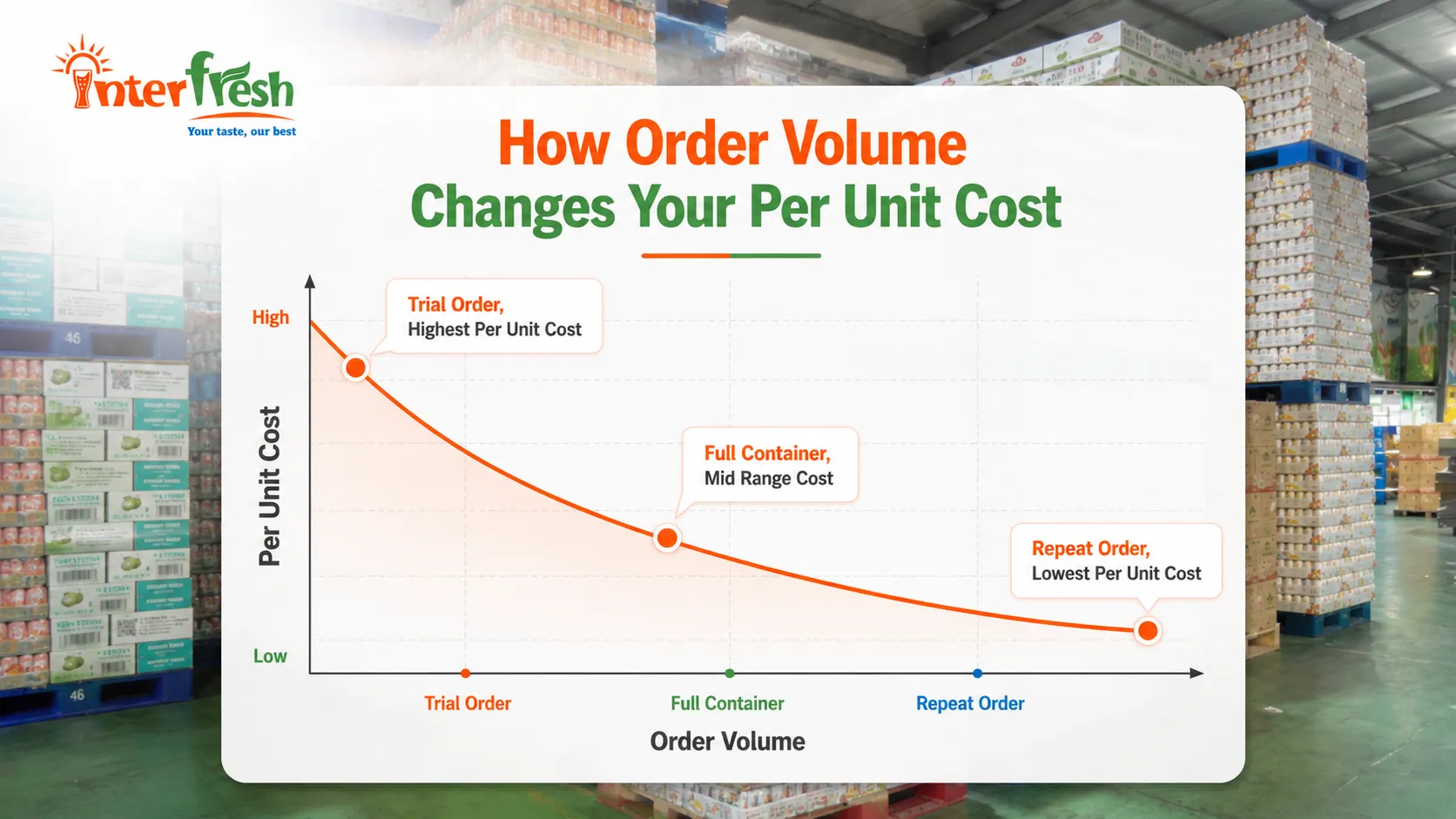
MOQ versus per unit cost curve for beverage manufacturing in Vietnam
Every category above moves down its range as order volume increases. A trial order near minimum MOQ sits close to the top of the stated range. A full container order, and especially repeat orders on an approved formula, can land near the bottom.
This happens because packaging tooling, changeover time and quality testing are largely fixed costs per production run. Spreading them across more units lowers the per unit share automatically.
Where Vietnam Sits in Global Beverage Manufacturing Cost
Vietnam’s cost position comes from a specific combination of factors, not one single advantage. Lower labor cost helps, but so does direct access to tropical raw materials without long import chains.
Trade agreement coverage adds a further layer. Vietnam participates in CPTPP, EVFTA and RCEP. This coverage can reduce landed cost for buyers in those regions well beyond the factory gate price. This structural advantage tends to matter more than small swings in any single input cost.
The global beverage packaging market itself is projected to grow sharply. It moves from USD 141.6 billion in 2024 to USD 232.3 billion by 2034 (Prismane Consulting, 2026). Rising packaging demand worldwide keeps upward pressure on can and bottle costs everywhere, not just in Vietnam.
Some buyers want a fuller origin by origin comparison. Our Vietnam vs China OEM beverage guide covers tariff exposure and certification depth side by side.
Budgeting for Q3 and Q4: What Importers Should Lock In Now
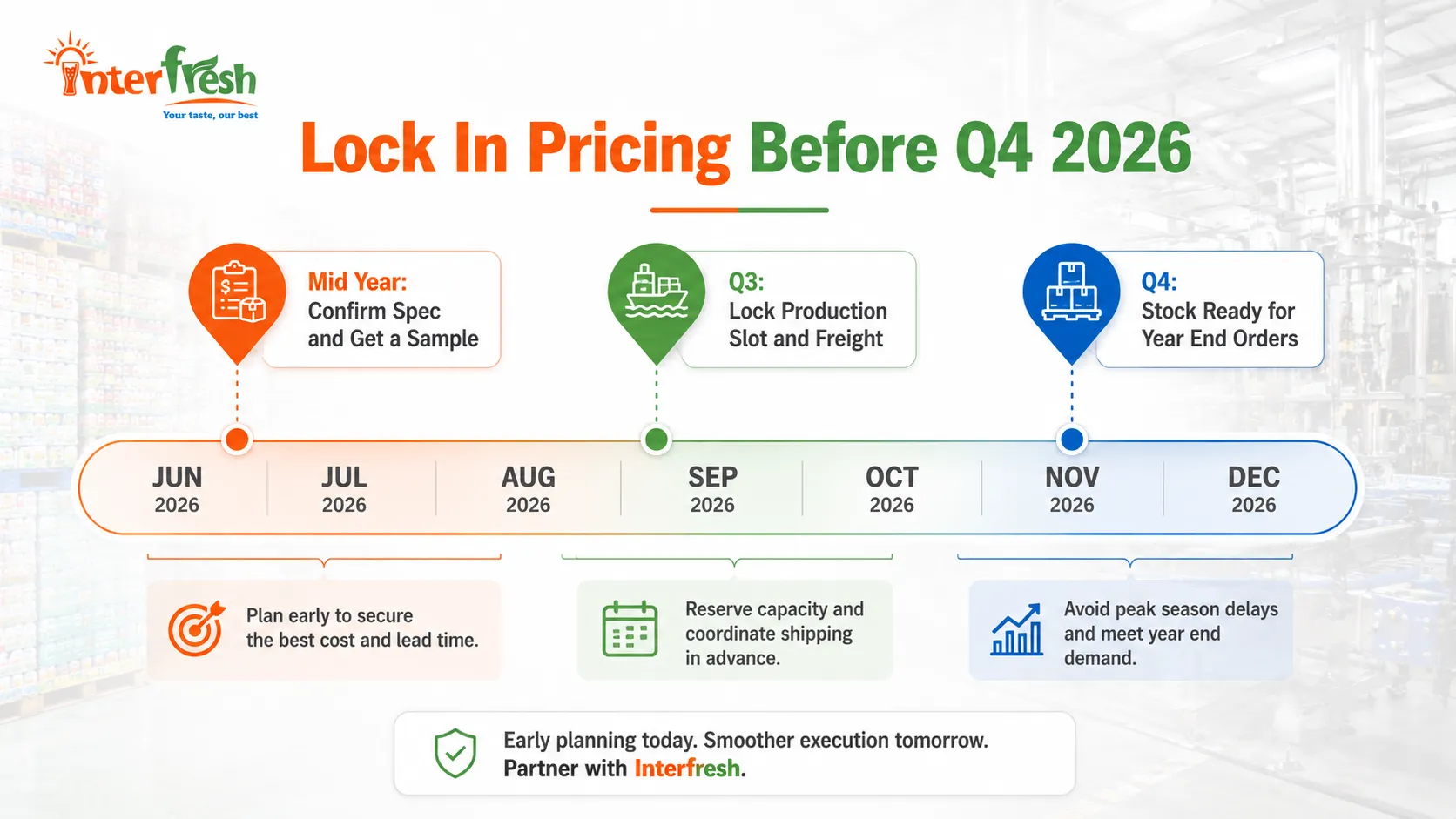
Q3 and Q4 2026 budget planning timeline for beverage import orders
Mid year is the right time to model landed cost, not just FOB price. Add freight, duty and any market specific certification cost before finalizing a number. For Middle East orders, factor in Halal certification for buyers too.
Packaging cost is the most volatile input right now. Aluminum price movement can shift a quote within a single quarter. Lock in packaging terms early if your order ships in Q4.
Confirm your MOQ tier in writing before budgeting. A quote based on a full container assumption will not hold if your actual order comes in smaller.
How a Beverage OEM Quotation Is Structured
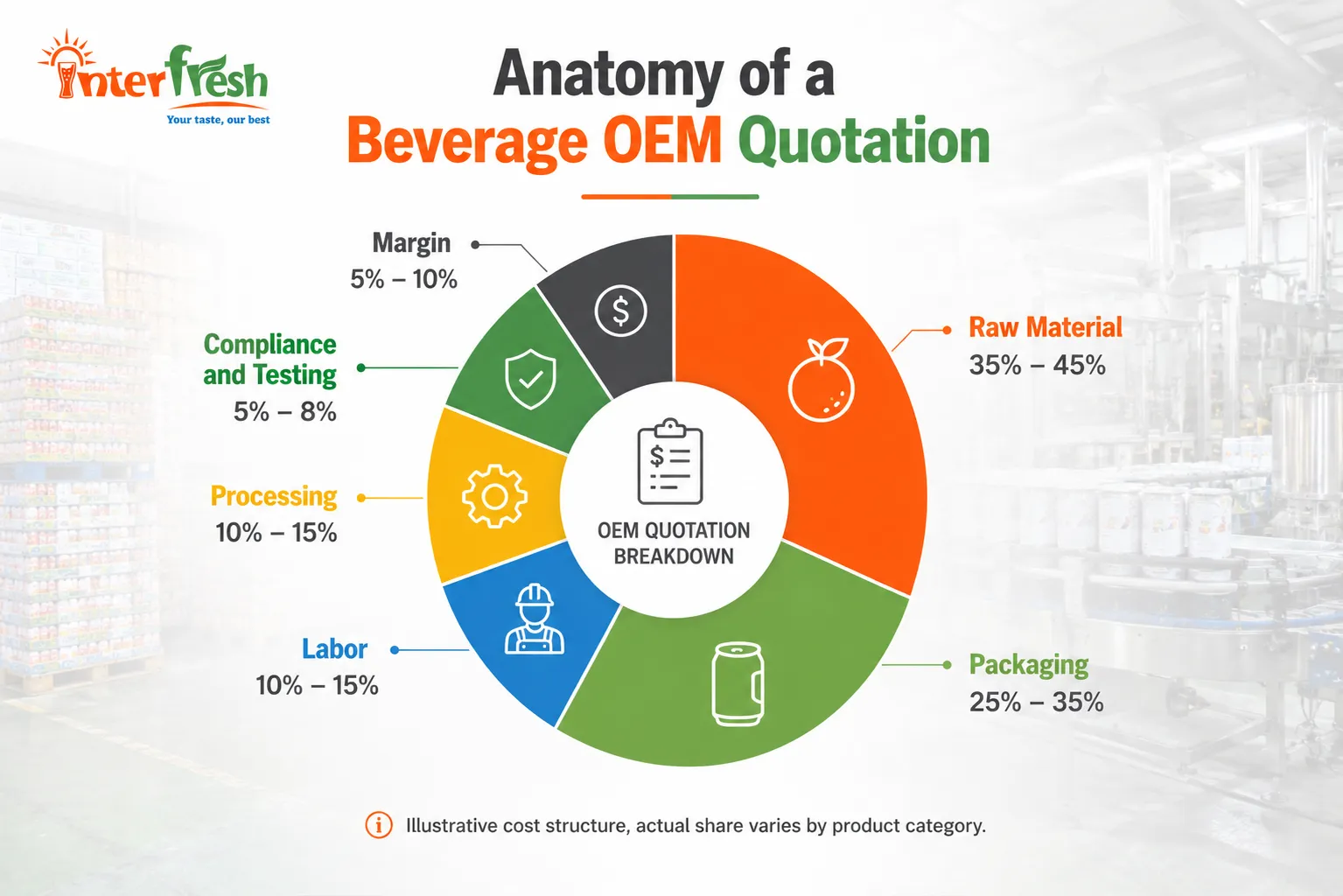
Beverage OEM quotation structure breakdown, line items explained
A factory quote is rarely one number. It usually breaks into raw material, packaging, processing, labor, compliance and a margin line. Reading it this way helps you spot where negotiation actually works.
Packaging and raw material together typically make up the largest share of any quote. Labor and processing costs move less between factories, since automation levels are fairly consistent across export grade Vietnamese plants.
If a quote looks unusually low, ask which certification and testing steps it includes. Our guide on how to import beverages from Vietnam to USA lists the documents a compliant quote should include.
Freight and Logistics: The Cost Layer Often Left Out
FOB price is not landed cost. Ocean freight, destination duty, and inland trucking on both ends all sit outside the factory quotation. Skipping this step is the most common budgeting mistake importers make mid year.
Freight rates have shown real volatility through 2026, tied to fuel cost and container availability. Locking in a freight quote alongside your production quote protects your Q3 and Q4 numbers from a mid cycle surprise.
Currency movement adds a second layer of risk. Most Vietnamese factories quote in US dollars, but local input costs are paid in Vietnamese dong. A weaker dong can help importers over time, though individual quotes may not reflect that shift immediately.
Getting an Accurate Quote for Your Own Product
Every range in this guide is a planning tool, not a substitute for a real quote. Formulation, packaging spec and MOQ all shift the final number for your specific SKU.
Interfresh manufactures across all seven categories covered in this guide, from fruit juice and sparkling drinks to functional prebiotic formulas. The team can price your exact specification, not just a category average.
Free sample testing is available before you commit to a purchase order. This lets you confirm taste, packaging and shelf life against your own brand standard first.
With Q3 and Q4 order windows approaching, now is the time to lock in pricing and production slots. To get an accurate quote for your product category, contact Interfresh for consultation and a free sample. Prepare early for your year end 2026 order cycle.
FAQs: Cost to Manufacture Beverages in Vietnam
What is the average cost to manufacture beverages in Vietnam in 2026? FOB pricing typically ranges from USD 0.12 to 0.42 per 250 to 330ml unit. The exact figure depends heavily on product category and packaging format.
Why do sparkling drinks cost more than still fruit juice? Carbonation requires a dedicated production line. Aluminum can packaging also costs more than a simple hot fill process for still juice.
Does a higher MOQ always lower the per unit cost? Yes, in almost every category. Fixed costs like tooling and testing spread across more units, which lowers the per unit share.
What is the biggest cost driver for coconut water? Raw coconut yield is the biggest driver. Seasonal nut supply and juice extraction rate affect quote to quote pricing more than any other factor.
How much does Vietnam’s 2026 minimum wage increase affect beverage cost? The 7.2 percent wage increase has a modest direct effect on canned beverage cost, since filling lines are highly automated. Labor sensitive categories see a slightly larger impact.
Is Vietnam cheaper than other Asian manufacturing hubs for beverages? Vietnam is generally competitive due to lower labor cost and strong access to tropical raw materials. Exact comparisons depend on category and packaging choice.
Does FOB price include freight and import duty? No. FOB price covers production only. Freight, duty and inland trucking are separate costs that importers must budget on top of it.
This article is part of Interfresh’s OEM and Private Label Beverage Manufacturer hub. Explore the full hub at OEM Private Label Beverage Manufacturer Vietnam for certification, MOQ and market specific guides.